Is the Land of the Pickup Truck Ready to Become the Land of the Electric Vehicle?

Munich, December 2021
A

ccelerating EV adoption is now a US government priority, but will the battery production, charging points and customer demand be there to make it happen?

After 11 months in office, President Biden has kick-started a long overdue drive to increase
electric vehicle (EV) adoption in the world’s largest economy. In contrast to his predecessor
in office, he has declared himself an advocate of e-mobility, saying electric vehicles are “a
vision of the future that is now beginning to happen”, and adding “there’s no turning back”.

The bipartisan infrastructure bill signed into law last month covers $1.2 trillion of federal spending. However, only $7.5 billion of the total will be invested in expanding the country’s charging infrastructure, compared with $110 billion for improving US roads and bridges.

“There’s a vision of the future that is now beginning to happen, a future of the automobile industry that is electric, […] The question is whether we’ll lead or fall behind in the future.”

Joe Biden | The New York Times

The Biden administration is also seeking to increase subsidies for battery electric vehicles (BEVs) to $12,500 per vehicle. However, that measure is part of the even larger $1.75 trillion Build Back Better act, which is still being debated in the Senate. The aim is to increase the share of BEVs and plug-in hybrid vehicles (PHEVs) among new car registrations to 50 per cent by 2030. This is a very ambitious target for the remainder of the decade, given the share of electric cars among new registrations in 2021 was 3 percent.

Far greater EV adoption is vital for the US to meet its emissions reductions targets, and the country is playing catch-up with China and Europe. We believe there are three elements that must be in place to enable change at scale, and they must happen simultaneously:

Outline illustration of two robotic arms working on a car, representing an automated car manufacturing or assembly process.

There must be a wide and attractive enough range of xEVs from different vehicle manufacturers to meet the various requirements of US buyers, from market- leading pickup trucks to affordable city runarounds.

Orange outline of a battery icon with three bars inside, indicating a medium to high charge level, on a light gray background.
Long transport times for battery cells increase the already high cost of batteries and pose the risk of supply bottlenecks. Building up local battery cell production in the US is a vital part of creating a successful EV market.
An orange outline icon of an electric vehicle charging station with a lightning bolt symbol and an attached plug on a light gray background.
“Range anxiety” is still putting customers off buying xEVs, and there will be no broad-based support for the market without sufficient public charging infrastructure right across the country.

Building xEVs that people want to buy

The subsidy outlined in the Build Back Better act, for BEVs and PHEVs costing as much as $80,000 to be eligible for tax credits of up to $12,500, is intended to spur the necessary change among drivers. However, $4,500 of the tax credit is only available if the vehicle is made in the US by union labor. This bolsters the top three US manufacturers – General Motors, Ford and Chrysler (Stellantis) – and strengthens domestic production.
500,000

Charging Stations about to build nationwide across the u.s.

Skilled workers will be “building a nationwide network of 500,000 charging stations. Creating good-paying jobs by leading the world in the manufacturing and export of clean electric cars and trucks,” Biden said in a speech in Pittsburgh. “We’re going to provide tax incentives and point of sale rebates to help all American families afford clean vehicles of the future.”

Joe Biden | Forbes

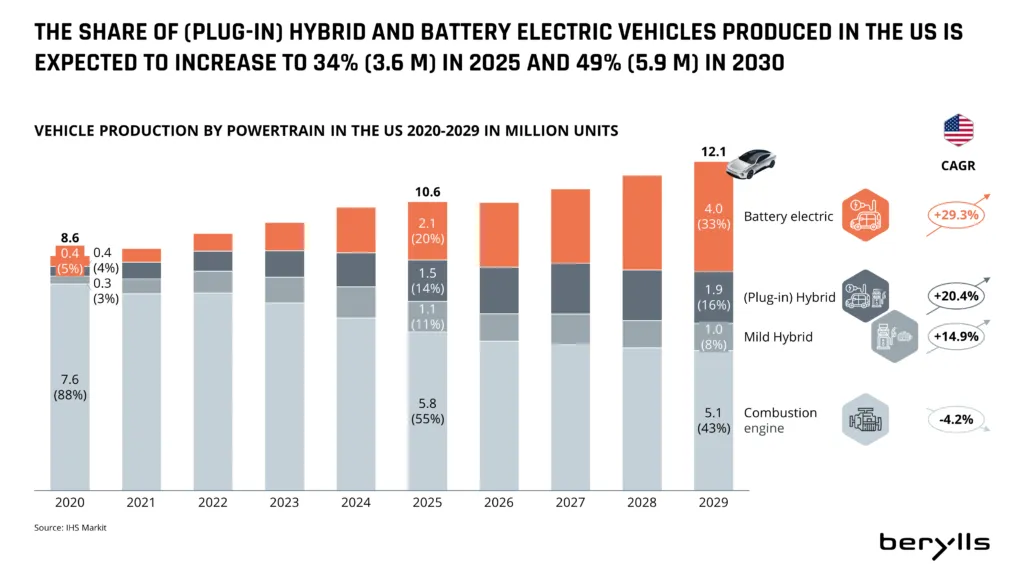
We assume that the share of PHEVs and BEVs produced in the US will increase to 34% (3.6 million vehicles) of all vehicles made by 2025 and 49% (5.9 million vehicles) in 2030 to reach the targets mentioned above (see Chart 1).

Insight download and author information

Authors

ALEXANDER TIMMER

Partner

Martin French

Principal & MD (US)

Dr. David Gutjahr

Senior Associate

VALENTIN FROH

Associate

Current Chapter
Bar chart showing US vehicle production by type from 2020 to 2029, highlighting growth in battery electric and plug-in hybrid vehicles, and a decline in combustion engine vehicles. Battery electric vehicles have the highest growth rate.

(Chart 1)

The act has not yet passed the Senate, but if it does so in its current form, the range of sEVs eligible for the maximum $12,500 subsidy would be limited considerably. Tesla and European OEMs that manufacture in the US, but whose workforce are not represented by the United Auto Workers union, are excluded. This creates a barrier to reaching the Biden administration’s target of xEVs making up 50 percent of new car registrations by 2030.

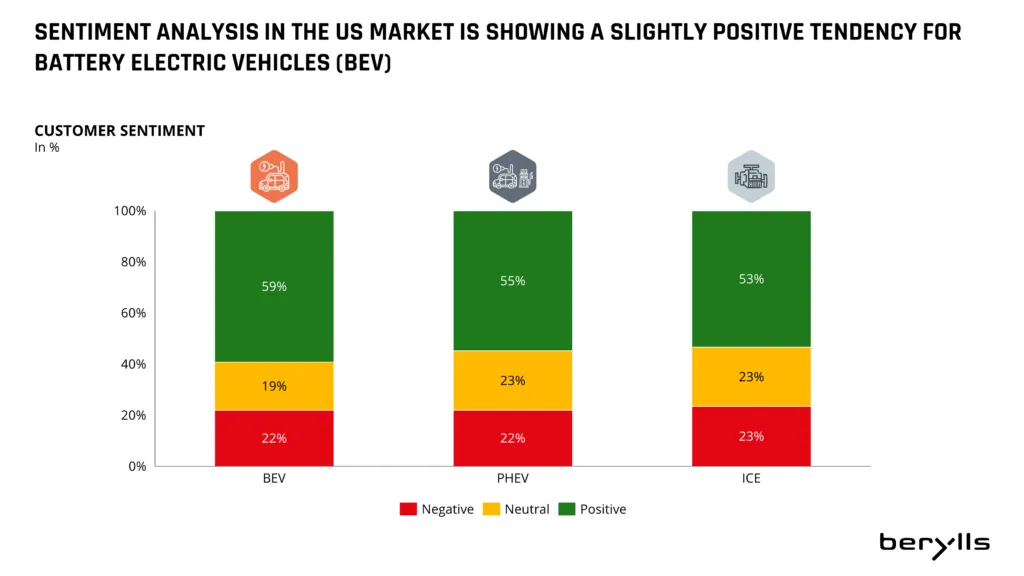
To better understand the extent to which xEVs appeal to US consumers, we conducted a sentiment analysis on a range of vehicle and engine types. The results showed surprisingly positive perceptions from customers. Among a selection of BEV and PHEV vehicles, the proportion of positive perceptions (59%) was slightly higher than for conventionally powered cars (53%) (see Chart 2).

Bar chart showing customer sentiment for BEV, PHEV, and ICE in the US market: BEV has 56% positive, 19% neutral, 25% negative; PHEV 55% positive, 22% neutral, 23% negative; ICE 53% positive, 23% neutral, 23% negative.

(Chart 2)

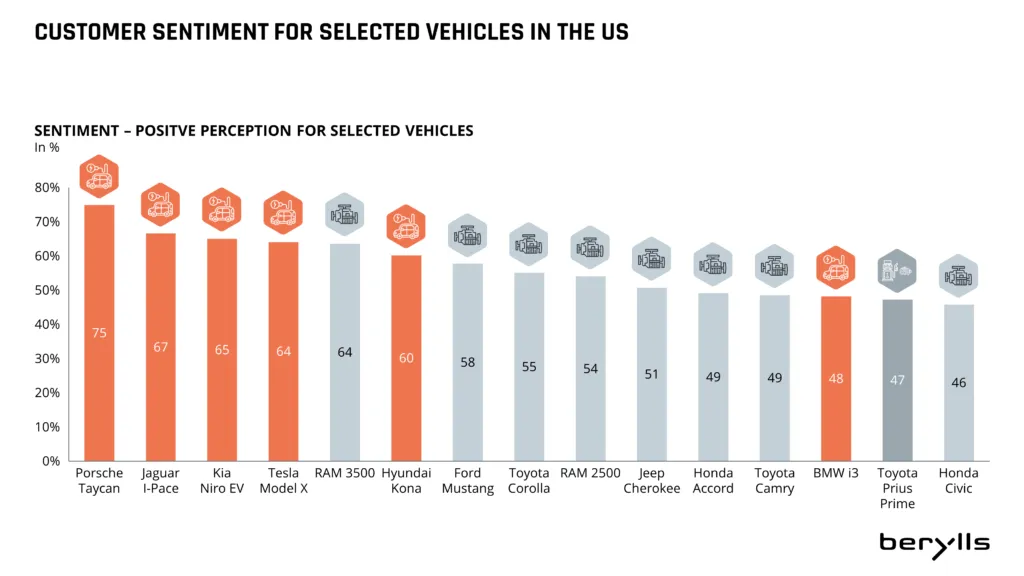
For example, a fully electric Tesla Model X was perceived as positively among our survey group as a Dodge Ram 3500, with 64% having a positive opinion. Of all the vehicles considered (ICE, PHEV and BEV), the top four were all-electric: the Porsche Taycan came out top (75% positive feedback), followed by the Jaguar I Pace, Kia’s Niro EV and Tesla’s Model X (see Chart 3). The Build Back Better act would exclude these models from the maximum possible subsidy for the reasons described above.

Bar chart showing positive customer sentiment for US vehicles. Porsche Taycan leads at 75%, followed by Jaguar I-Pace (67%) and Kia Niro EV (65%). Honda Civic trails last with 46%. Other brands fall between 63% and 47%.

(Chart 3)

SUV and pickup models are particularly in demand among US customers, and the three major US OEMs have traditionally been strong in these two segments, with models such as the GMC Sierra, the RAM 1500 and the Ford F150. BEV or PHEV models made by these manufacturers have a good chance of receiving the maximum tax credit, and as a result, the widespread introduction of e-mobility in the US is likely to come via electric SUVs and pickups with powerful but costly batteries.

Production capacity for battery cells

To scale up xEV production in the US in line with the government’s ambitious targets, battery production must also be greatly increased. The transport cost of importing batteries from Asia adds to their already-high cost, and continuing to reply on imports will also impact the EV subsidy available to drivers (of the $12,500 on offer, $500 is for US-made batteries).

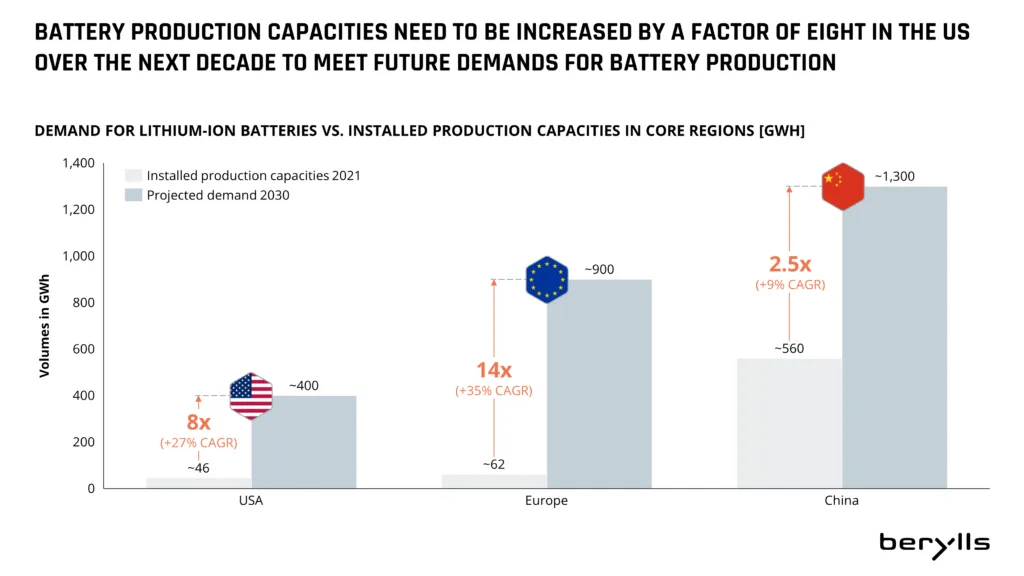
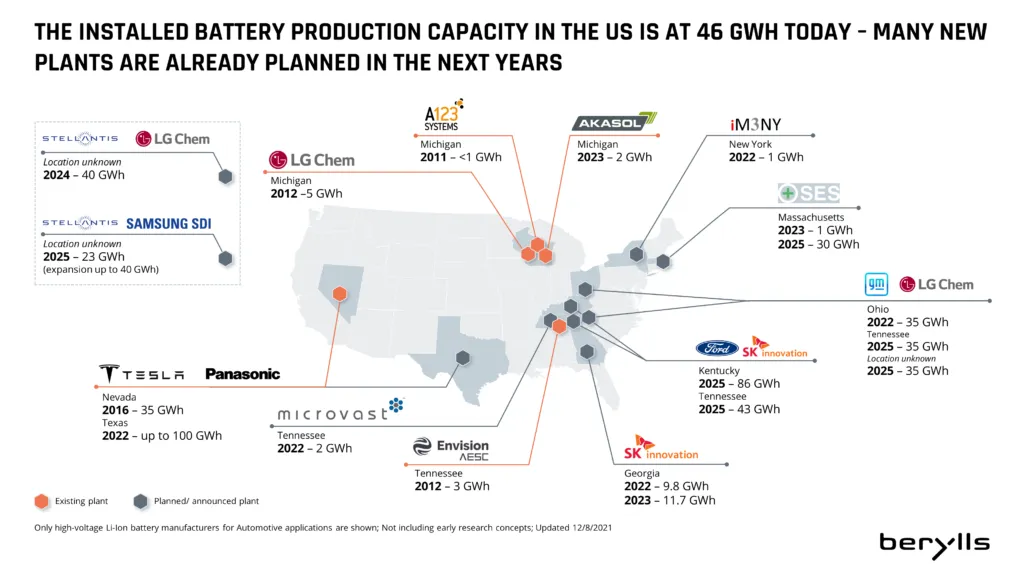
At present, the US has 46 gigawatt hours (GWh) of battery cell production capacity, of which 76 percent comes from the Tesla and Panasonic Gigafactory in the state of Nevada. By comparison, Europe currently has 62 GWh and China a staggering 560 GWh of production capacity (see Chart 4).

Bar chart comparing lithium-ion battery demand vs. installed production capacity in 2021 and projected demand in 2030 for the USA, Europe, and China, showing significant future increases needed, especially in China and Europe.

(Chart 4)

However, we expect the US to grow at a significantly faster rate in the next few years to catch up. Battery cell production capacity will expand by around 27 per cent a year to reach about 400 GWh per year by 2030, to meet pent-up demand. This would be enough to supply batteries for the 4 million BEVs that are expected to be produced in the US each year by 2030. To secure supply, US OEMs have started joint ventures with cell manufacturers (see Chart 5).

Infographic map of the US showing locations, companies, and capacities (GWh) of existing and planned battery production plants, with icons marking each site and lines connecting to company names and opening years. Title and legend included.

(Chart 5)

Charging infrastructure

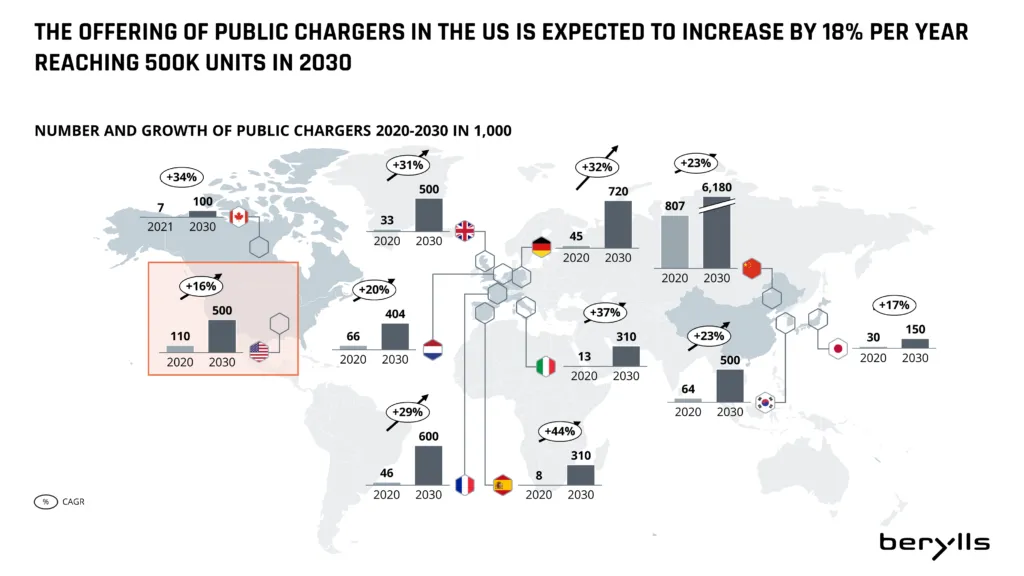
Making the EV transition a reality is highly dependent on having the right charging infrastructure in place. Currently, there are 110,000 public charging stations in the US, which are largely concentrated in wealthy east and west coast states including California. The middle of the country is still poorly equipped, particularly in states such as Idaho, Wyoming and Montana. The Biden administration’s goal is to create a national network, installing 500,000 public charging stations by 2030, which equates to about 18 percent annual growth (see Chart 6).

However, for a country the size of the US, these are not ambitious numbers. The UK, which is a fraction of the size, also wants to install 500,000 charging points by 2030. France is planning 600,000, Germany 720,000 and China 6.2 million.

A world map showing projected growth of public EV chargers from 2020 to 2030 for several countries, with the US expected to increase from 110K to 500K (18% CAGR). Other countries such as China and Germany also show growth.

(Chart 6)

We assume that in 2030 there will be 57 million fully electric cars on the roads in Europe and 24 million BEVs in the US. This means that, statistically speaking, approximately 20 electric cars would share one charging station in Europe, whereas in the US there would be 48 per charging station. An optimal ratio would be around 10 to 15 cars per charging station.

Also Germany faces a challenge in scaling up infrastructure quickly enough – 2,000 public charging points would have to be installed per week to meet the optimal cars per-charging-station ratio, but in reality, only 200 are currently being installed.
The US’s challenge is even greater: to reach the same charging ratio as Germany, we estimate the pace of installation would have to be twice as fast, at 4,000 charging points per week. As a result, we regard this infrastructure gap as the issue most likely to slow down widespread xEV adoption the US.

In Germany, EV infrastructure has been repeatedly put on the back burner. However, in the US, the Biden administration has the chance to take action. By recognizing the need to catch up with China and Europe, the government can start investing and incentivizing on the right scale now.

ABOUT THE AUTHOR

Dr. Alexander Timmer (1981) joined the Berylls Group, an international strategy consultancy specializing in the automotive industry, as a partner in May 2021. He is an expert in innovation and market entry strategies and can look back on many years of experience in the operations environment. Dr. Alexander Timmer has been advising automotive manufacturers and suppliers in a global context since 2012. He has in-depth expert knowledge in the areas of portfolio planning, development, and production. His other areas of expertise include digitalization and the complex of topics surrounding electromobility.

Dealer vs Agent

Munich, December 2021
F

or over a century the auto industry has operated a B2B2C model with car makers (OEMs) wholesaling vehicles and parts to dealers who then retail these goods, packaged with additional services to customers, both private individuals and other businesses. This model has by and large been applied globally, with local variations due to industry structure and, importantly, regulation.

At least over the last several decades various tweaks have been made to mitigate structural weaknesses and cater to evolving markets and customer preferences. OEMs established direct sales channels, at first limited to government and large fleets, eg. rental car companies – and have expanded their coverage over the years, often in collaboration with their captive finance companies. There have also been some exceptions from the general rule, for example, (mostly) French and German OEMs owning retail outlets referred to as ‘succursale’ or ‘Niederlassung’ across European and some global markets. The retail networks also went through a continuous consolidation, reducing the number of outlets and more dramatically the number of owners/investors across most markets. We saw the birth of mega-dealer groups with several hundred stores retailing a wide portfolio of brands. And we have numerous international retail groups today. But the underlying ‘proven concept’ has not changed a lot.

In the meantime, the emergence of eCommerce has turned many other retail industries upside down. In automotive we are mostly still talking about it. Yes, prospects and customers have moved a large part of their pre-purchase research and a similar part of their post-purchase discussions online, but very few customers have so far been able to acquire a new car online. Nevertheless, eCommerce and the digitalization has triggered an intense discussion about the future of auto retail. And the very foundation of the current retail network is being questioned: the franchised new automobile dealer.

‘Going direct’ has become a buzzword, not least because Tesla has been ‘going direct’ from the start and by now owns and operates a global retail network that combines physical outlets with a comprehensive digital offering. Several other new players have ‘gone direct’ in more or less pure ways – take Polestar with their mostly digital and direct sales approach, backed by a physical service network, in the form of ‘old-fashioned’ Volvo dealers. The newly (SPAC-)funded US EV start-ups Lucid, Rivian and Faraday are in various stages of announcing and building their exclusive direct channels – with owned glitzy showrooms and versatile digital front ends.

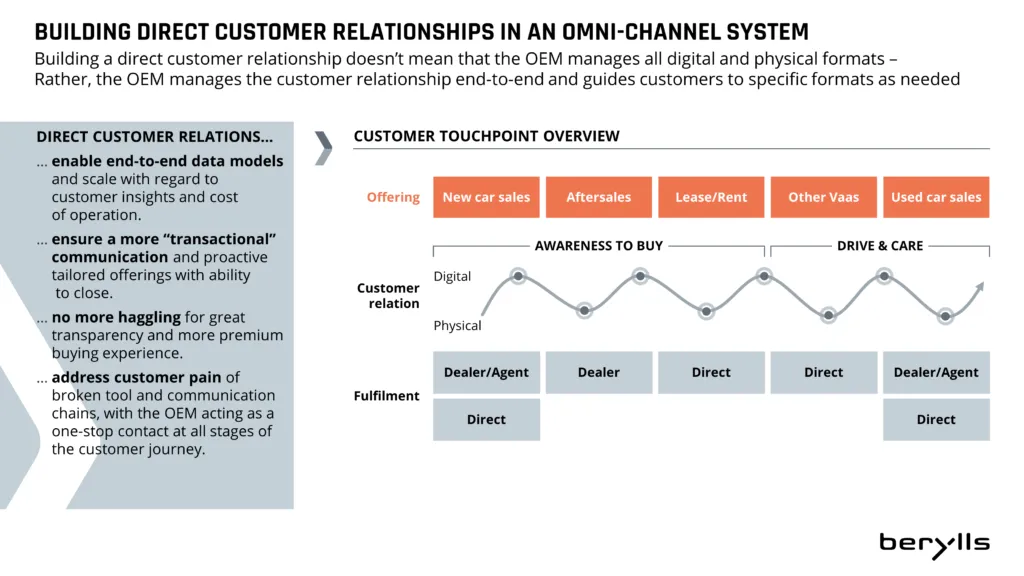
This ‘fully direct’ approach is not an easily available option for incumbent OEMs with their existing dealer networks. But ‘direct sales’ does not have to mean owning your front-end – several OEMs are either testing or implementing (and many more are considering) a significant contractual change in their networks by converting their dealers to agents. New car sales will then be made directly by the OEM to consumers, while the agent may assist the customer in the process. Swedes and Austrians can now buy Mercedes-Benz cars this way, as can VW ID and Volvo BEV buyers in Europe.

Insight download and author information

Author

ARTHUR KIPFERLER

Partner & MD (UK)

Current Chapter
Infographic showing how OEMs build direct customer relationships across digital and physical channels, detailing customer touchpoints from awareness to buy and drive & care, with steps for offering, channel, and fulfillment.

These direct sales approaches certainly have tempting advantages: an ever more digitalized customer journey and the supporting digital performance and lead management activities ideally require a fully integrated tri-party-relationship between OEMs, retailers and customers so each can conduct their activities and meet their specific needs at each step. It is entirely clear that operationally direct sales can make digitalization easier. But the OEMs motivations go beyond gaining operational benefits: better price realisation and lower retailing cost are important objectives of any such strategy. The underlying drivers are also undisputed: direct sales can all but eliminate intra-brand competition (ie. dealers of the same brand competing mostly based on price) and a more efficiently managed direct channel can reduce cost.

However, the devil as so often is in the detail and the alternative – improving the dealer system – also deserves consideration. To stimulate your thinking, we are pitching the two systems against each other in a little competition.

PRICE REALISATION

How easy will it be for the agent system to eliminate intra-brand competition and to move up transaction prices? The key is rigid enforcement of sales territories. Compensation must uniquely be paid to the agent who has the assigned responsibility for the home location of the customer, even if another agent entered the customer order in the OEM’s front-end system. There cannot be a work around, otherwise agents will simply give away parts of their commission to lure customers from other territories. Fortunately, the legal frameworks behind such ‘true agent’ systems in many markets allow such full territory protection. Realistically speaking an OEM should not expect to increase transaction prices by more than one percentage point, especially not when key competitors of a brand still work with a traditional dealer model. And they should not forget that intrabrand discounts come out of the retail margin – and clawing them back from retailers is not a given when switching them over to agent status.

The alternative solutions for dealer networks have limited potential left towards this objective: Intra-brand competition was initially fueled by over-crowded dealer networks with highly fragmented ownership – the old pop’n’mom dealerships ‘wherever there is a post office’. Continuous and persistent network restructuring by OEMs has reduced this problem, but the internet’s price transparency and digital disruptors like Carwow have limited the effects of network streamlining. Even a handful dealers in a given market have an incentive to out-price each other especially when stair-step and other volume incentives disproportionally reward the last few cars sold.

1:0

for the direct model

RETAIL COST

How about cost reduction? Since CI and standard-driven facility costs depend only on the network approach of a brand, we can keep them out of this consideration, leaving us with the operating and people cost in showrooms, the cost of inventory and the cost of processes and systems.

Almost all benefits of a highly digitally enabled selling process can also be realized in a traditional dealer channel. Car buyers have for years reduced the number of visits to dealerships – and therefore the cost of taking care of them in the showrooms. The remaining need for product demos and test drives is rather independent of the contractual scheme. However, removing the ‘deal stacking & closing’ elements from the sales process allows to replace the highly sought after and therefore highly paid sales consultants with lower paid product experts. Needless to point out that customer satisfaction will generally increase with the ‘haggling’ removed from the car buying process.

Agents in the new system will obviously no longer hold any new car inventories. They will simply transfer to the OEM, who then can work to reduce their level and cost. However, the resulting cost reduction by pooling stocks (and more production discipline) could also be achieved in a dealer model.

On the other hand, a transition to direct sales will also add cost. The required digital front-end systems don’t exist today and have to be built and maintained (by the OEM). Making direct transactions with end users will also require costly modifications to OEMs’ back-end systems and processes. Also, additional personnel will be required in the National or Regional Sales Companies to manage the new car inventory, to determine transaction prices and to handle customer inquiries – all tasks so far handled by dealer staff. And as with customer discounts it is not a given that the cost savings on the dealer level can be clawed back easily by the OEM in the contract switch. The required investments will have substantial pay-back times for the OEM.

2:1

Overall, more of a draw on cost reduction

MARKET SHARE PERFORMANCE

All coins have two sides – and the other side of the ‘intrabrand competition’ coin is market penetration: dealers in intense competition with each other have every incentive to pursue any lead and sell vehicles to whoever they can. This ensures that local weaknesses in a network are often compensated by other dealers selling remotely into the weak dealer’s home territory, overall raising the brands national market share.

An agent, who will draw commission only from sales in his territory will make no such effort. And the formerly weak dealer will not suddenly become a strong agent – as a consequence the brand will inevitably lose market share to competitors in his territory, reducing the national average. It is not easy to envision ways how a direct selling NSC can compensate such localised weaknesses.

Looking at the agents’ own territories a lack of motivation cannot be completely ruled out: the commission is guaranteed for every sale the OEM makes in the territory – selling, after all, is now the NSC’s task. It is quite easy to imagine how the status change can impact morale, ambition, and motivation in what is in essence still a people business. “Why try hard and go the extra mile, for example to provide a test drive to a prospect at an inconvenient time?” Or why follow up the third time with an indecisive prospect? Why keep your showroom well maintained and equipped with state-of-the-art amenities? Let the NSC’s website do the job – and make money in aftersales.

"Why try hard and go the extra mile, for example to provide a test drive to a prospect at an inconvenient time?"

2:2

On market penetration, the ‘old’ dealer system wins

THE TRANSITION ITSELF

Switching contractual system requires, well, a switch. Two different approaches are available:

1. Switching national networks on a fixed date – and staggering regional markets along a longish transition period.

A market-by-market switch makes the inevitable financial consequences easier to shoulder. The revenue lost during the sell-out of existing dealer stock is spread over several years, as is the parallel extension of the OEM’s balance sheet with retail stock. Therefore, the length of the required transition period only depends on the OEM’s financial and change capacity. For a specific dealer, however, the switch is a one-time event that can be properly prepared to minimize negative effects – in our opinion the easier to manage approach.

2. Introducing the new system with new models – a new BEV-subbrand for example. This transitions a whole region at the same time but leaves both systems at work under one and the same rooftop.

Approach #2 reverses the pros and cons – but puts yet another layer of challenge on the already difficult transition to electric vehicles. The transition itself is bound to span the better part of the decade, raising the change management challenge. Also, there are not many – if any – examples where two different retail systems could be successfully co-operated in the same channel over a longer time. The resulting conflicts of interest make daily showroom operations more difficult – and reduce the OEMs ability to ‘steer’ sales efforts.

3:3

While a switch to agents requires a risky change effort, an existing dealer system still needs continuous improvement

So What

For any senior sales executive the dealer-or-agent question is very pertinent today. With an even score in our brief review the decision is certainly not easy to make. We therefore recommend making a decision only after thorough consideration of all factors and implications of both solutions for your specific brand’s situation.

Don’t get seduced by easy cost savings and straight-to-the-bottomline price increases – they might come with expensive side effects like high investments, increased running cost and a loss of market share.

Also, don’t forget in your considerations that some or even many of your competitors will continue to operate the traditional system, but substantially improve it with structural reforms and behavioral changes, reaping certain benefits without all the expense of a switch.

Therefore, plan realistically and do not overestimate potential benefits of the agent system while discounting the required change efforts.

Berylls Strategy Advisors would be happy to support you in this key decision process.

Arthur Kipferler complements the expertise of the Berylls partner team in the fields of market & customer, technologies, sales, and digitalization, as well as in the development and implementation of corporate, product, and regional strategies.

Finding the wow factor – How Chinese EV manufacturers can succeed in Europe

Munich, November 2021
I

n recent weeks, the Chinese OEM NIO has been in the news for entering Europe’s EV market via Norway. Eventually, NIO aims to repeat its success in China by expanding into major European automotive countries, including Germany, France, and the UK.

Several other Chinese EV manufacturers such as Aiways and XPeng have also entered Europe or are planning to do so, fueled by their success at home. Yet despite their highly ambitious targets, all these Chinese OEMs apart from NIO are plagued by one common issue. They are widely unknown in Europe.

What works in China may not work in Europe’s EV market

The frequent mistake made by Chinese OEMs is to assume that success at home is replicable abroad. Thus, they take their existing EV portfolio, digital ecosystem and sales model and simply transplant them to Europe, on the basis that what works well in China will work equally well in Germany or other European automotive markets. For example, Chinese OEMs try to completely bypass Europe’s traditional wholesale retail system and use the agent model instead.

Chinese OEMs face other obstacles in Europe. So far, the limited brand recognition achieved by Chinese vehicles has generally been unfavorable, due to safety concerns. Many European customers remember Landwind, the Chinese-built SUV that failed a crash test conducted by the national automobile club ADAC in 2005, causing lasting damage to the image of Chinese cars in Germany.

In early 2021, ADAC conducted another crash test on the Chinese electric car Suda SA01 which is being sold in Germany at a dumping price. The Suda SA01 failed the test with “glaring safety deficiencies”: no airbag, no Electronic Stability Program (ESP), no emergency brake or lane-keeper assistant, and no seatbelt tensioner.

An additional handicap for Chinese OEMs is that European consumers are generally loyal towards traditional brands with persuasive marketing stories, and already have plenty of choice. The lesson here is that OEMs cannot just depend on the quality of the product to generate sales. Nor can they simply rely on dealership groups to do their marketing or to formulate the customer experience.

The WOW factor – a must-have for Chinese EV manufacturers

These issues explain why Chinese EVs remain largely unknown in Europe and difficult for consumers to differentiate, except for the wrong safety reasons. To gain traction in Europe, Chinese EV manufacturers must firstly get the basics right.
As well as offering good-quality vehicles, they need to identify the most important use cases to help them understand the specific requirements of European customers, as compared with Chinese car buyers. The next step is to create brand awareness and reach out to targeted customers via online and offline brand marketing campaigns. During and post-sale, Chinese OEMs must provide a strong customer experience and integrated product offering, with seamless connections between the online and offline world that deliver a holistic ecosystem of services and technology upgrades.
Yet in an increasingly populated European EV market, Chinese OEMs still need one key ingredient to stand out from the crowd – the WOW factor. They have to surprise customers with an offering that European car buyers might never have expected from a Chinese brand, whether it is a product that amazes, a technology solution that astonishes, or an ecosystem that fascinates.
By definition, an OEM’s WOW factor must be unique – Chinese EV manufacturers will get nowhere if they try to imitate Tesla. Instead, they must aim to be the Chinese brand in Europe which rises above both other Chinese and European competitors. Based on the evidence so far, Chinese OEMs have yet to grasp this critical point.

Insight download and author information

Author

Willy Wang

Principal & Managing Director Berylls China

Willy Wang

Willy Lu Wang (1981) joined Berylls Strategy Advisors in 2017. He started his career participating in the graduate program of Audi focusing on production planning. After stations at another strategy consultancy as well as being the strategy director for a German Tier-1 supplier, he is now responsible for the China business at Berylls.

He has a broad consulting focus working for all clients in China, whether they are JVs, WOFEs or pure local players. He is also responsible for the development of AI and Big Data products dedicated towards the Chinese market further strengthening the Berylls End-to-End strategy and product development capabilities.

Wang studied Electronics & Information Technology with focus on Systems and Software Engineering and Control Theory at Karlsruhe Institute of Technology.

Sales and marketing transformation agenda 2025

Munich, September 2021
T

he digital revolution is transforming automotive sales and marketing at an accelerating pace as economies bounce back from the pandemic.

Amid the upheaval, the winners will be those players that capture the opportunities created by new, data-driven technologies to improve the customer journey.
Berylls Mad Media has developed a direct-to-consumer sales and marketing approach which we call the “Infinity Loop” to give you a head start over the competition. The loop delivers continuous optimization of the customer journey through constant interaction between data-driven end-to-end (E2E) marketing activities and omni-channel sales.
Time is short. The sales and marketing transformation race is a sprint where the winners will emerge at speed. For this reason, Berylls Infinity Loop leverages five key transformation levers to help you cross the finishing line by 2025.
Discover more in our point of view.

Insight download and author information

Berylls Insight

Sales and marketing transformation agenda 2025 -Five transformation levers to get ready for a high-performing sales & marketing organization that puts the customer first
DOWNLOAD

Authors

Jonas Wagner

Managing Director

Sascha Kurth

Senior Associate

Jonas Wagner

Jonas Wagner, born in 1978, is a Partner and Managing Director of Berylls by AlixPartners (formerly Berylls Mad Media). With around 20 years of consulting experience in the automotive industry, Jonas is a trusted advisor for top management, specializing in strategy, organizational development and large transformation programs for leading, global automotive manufacturers.

Jonas excels in guiding automotive companies through the transformation of their sales and marketing functions. He has a proven track record in digitalizing customer interfaces to enhance customer experience, sales conversion and loyalty. His expertise includes introducing and implementing new sales and business models tailored to the evolving market landscape and developing data-driven sales and marketing organizations to optimize performance and efficiency. His expertise includes all on- and offline touchpoints as well as business segments, ranging from sales, after-sales, financial services to new business models.

Before joining Berylls, Jonas was a leading consultant within the Automotive Practise of Oliver Wyman, where he worked with global automotive manufacturers, enhancing their strategic initiatives and operations.

Jonas holds a degree in Business Administration from the Aarhus School of Business and the University of Mannheim, with a focus on International Management, Marketing, and Controlling. Combining deep industry knowledge with strategic acumen, Jonas Wagner is a valuable partner for automotive leaders navigating complex transformations.

Sascha Kurth

Sascha Kurth (1987) is a Partner at Berylls by AlixPartners (formerly Berylls Mad Media), a company specializing in the automotive industry. He is an expert in building, transforming, and restructuring sales and marketing organizations and has experience from more than 30 projects in this context. From his perspective, it is particularly important for sales and marketing organizations to have clear and measurable goals and a clear and comprehensible strategy for achieving them. Subsequently, the focus is on creating an effective, efficient, and self-optimizing organization from the right people, processes, partners, and necessary governance. Technology and data are crucial enablers for leveraging the efficiency and effectiveness of the resources used multiple times. This is essential to be competitive, remain competitive, and develop competitive advantages for the future. However, they are not an end in themselves but always enablers to achieve the goals (better). Sascha Kurth is convinced that building effective and efficient sales and marketing organizations is a crucial long-term competitive advantage for the entire company and that paid advertising (especially increasing the budget) should be one of the last initiatives to achieve strategic goals.

Sascha Kurth has been supporting automotive manufacturers in a global context since 2013. He has extensive expertise in goal-oriented sales and marketing planning, Paid, Earned, Owned- funnel management, data management platforms & customer data platforms, e-commerce platforms, programmatic advertising, customer relation management, smart KPIs, and management dashboards.

Prior to joining Berylls Mad Media, he supported leading OEMs, e-mobility start-ups, telecommunications companies, and fast-moving consumer goods manufacturers in their sales & marketing transformation at various consulting firms.

Private Equity

Private equity in the car industry – present and future investment approaches

Munich, June 2022

Insights

Private equity in the car industry – present and future investment approaches

Munich, June 2022
S

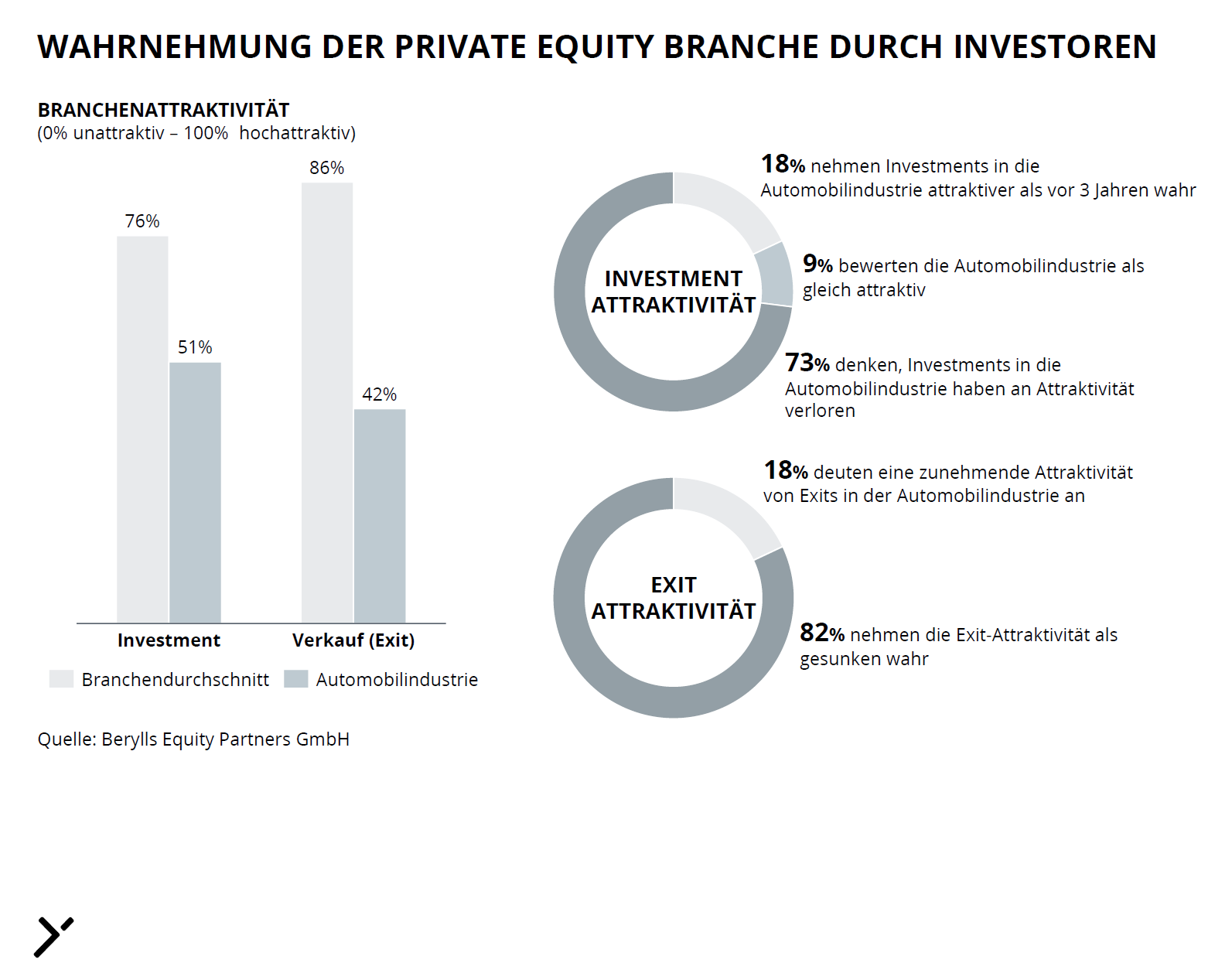
trong competition from strategic investors including OEMs and suppliers, and banks’ pullback from the car industry, are preventing large-scale growth investments and buyouts by private equity investors. Only turnaround investors seeking restructuring cases have been active. But a new generation of car manufacturers can change this in the future.

Seldom has there been so much wealth circulating, in search of attractive investment opportunities. Private equity remains one of the most lucrative investment classes; however the success story does not currently include the car industry. Private equity investments in automotive companies are at present far below average, and falling. That raises questions: why have private equity investors stopped trusting the sector they once loved, and will they return to the auto industry in the future?

Turbulent times restrict access to borrowing

Technological change, new business models and macro-economic trends are turning the car industry on its head, leading to a redistribution of profit pools along the value chain. Traditional car manufacturing companies’ profit margins are coming under pressure and strategic investors find themselves forced to restructure their portfolios, in order to remain competitive in the new age of mobility. The car industry is also dependent on highly complex global supply chains and as a result has been more severely affected by production losses caused by wars, pandemics and raw material shortages than other sectors.

More than three years of low returns have resulted in increased debt ratios and tight liquidity positions. Small and medium-sized suppliers have increased their net debts by an average of more than a third in the last few years. Even the major Tier 1 suppliers such as Continental, Bosch, ZF and Schaeffler have had their credit ratings reduced. Consequently, lenders are limiting their exposure to the car industry.

Available loan capital volumes have fallen and interest rates have risen. Traditional banks are cutting back investment in the sector, and alternative loan capital sources do not look much better. Debt funds can invest with a higher risk profile than banks and also sometimes make unsecured commitments. But for these, they need good financial planning and reliable cashflows. Instead, they are confronted with an uncertain outlook and will only get involved on favourable terms, if at all. Asset-based lenders are seen as the most expensive – and therefore the most unpopular – loan capital source.

Berylls Insight

Private Equity in the automotive industry - are investors still interested?
DOWNLOAD

Authors

Andreas Rauh

Executive Partner

Johannes Auch

Investment Analyst

Growth and buyout transactions almost impossible but turnaround holds attractive opportunities

Due to the synergy potential and longer investment horizons, strategic investors are currently prepared to pay higher purchase prices than financial investors. When prices are at a premium and lenders are unwilling, the value model of buyout funds (purchase price financing through additional debt (leverage) and dividend payments) is no longer sustainable. Other sectors currently provide better returns for private equity because lending conditions are more favorable.

However, carve-outs, succession situations and insolvencies have created many attractive opportunities for turnaround investors in the automotive sector. Strategic investors are put off turnaround companies because of the risk, time and management capacity involved. As a result, turnaround investors find themselves faced with limited competition for target companies.

Reassessing company structures and transferring manufacturing expertise into sustainable and growing product areas sets turnaround companies up for long-term growth. Bolt-on acquisitions and order volumes taken over from insolvent competitors also create economies of scale and improve the negotiating position with customers and suppliers.

For all these reasons, in the private equity space, the automotive sector is currently only attractive to turnaround investors with the necessary expertise. The ability to differentiate between attractive target companies in a fast-changing market, and develop their long-term potential, is essential for investments to succeed. Bringing in the right management capability to realize a company’s operational potential and improve the cost structure, accompanied by a reliable network in the car industry and in the turnaround community, facilitates targeted and efficient restructuring measures and sustainable relationships with all stakeholders.

What does the future hold for private equity investments in the car industry?

Venture capital investors are already widely involved with automotive start-ups focused on new technologies and alternative business models, including Vehicle-as-a-Service and shared mobility ventures. As soon as this new generation of companies scales up and their cash flow turns positive, they will be an great fit for growth and buy-out investors’ investment criteria. In this respect venture capital investments can be seen as a precursor to private equity interest.

With greater clarity on what the future of the car industry will look like as time goes on, we expect lenders to regain their confidence and increase their engagement with the mobility industry. Loan-financed investment models will become lucrative again, and growth and buy-out investors will return. For turnaround investors, the intense competition in the car industry and the tremendous pace of development mean there will be no shortage of companies that are left behind and in need of external expertise and capital.

About the author

Andreas Rauh

Andreas Rauh joined Berylls Equity Partners as co-founder and managing director in January 2020. Berylls Equity Partners, as the investment company of the Berylls Group, invests in companies in the mobility industry that are in special situations.

Andreas is an expert in private equity, mergers & acquisitions and corporate management.

After ten years in transaction advisory with a focus on medium-sized companies, Andreas moved to the investment sector in 2014. There, he has since accompanied a double-digit number of company acquisitions and sales in a leading role.

Andreas is a business graduate with a diploma from the University of Trier and holds a Master of Science in Business degree from Handelshøyskolen BI.

Perspective • Standpunkt

After the pandemic and microchip shortages, is there a raw materials crisis on its way?

Munich, June 2022
C

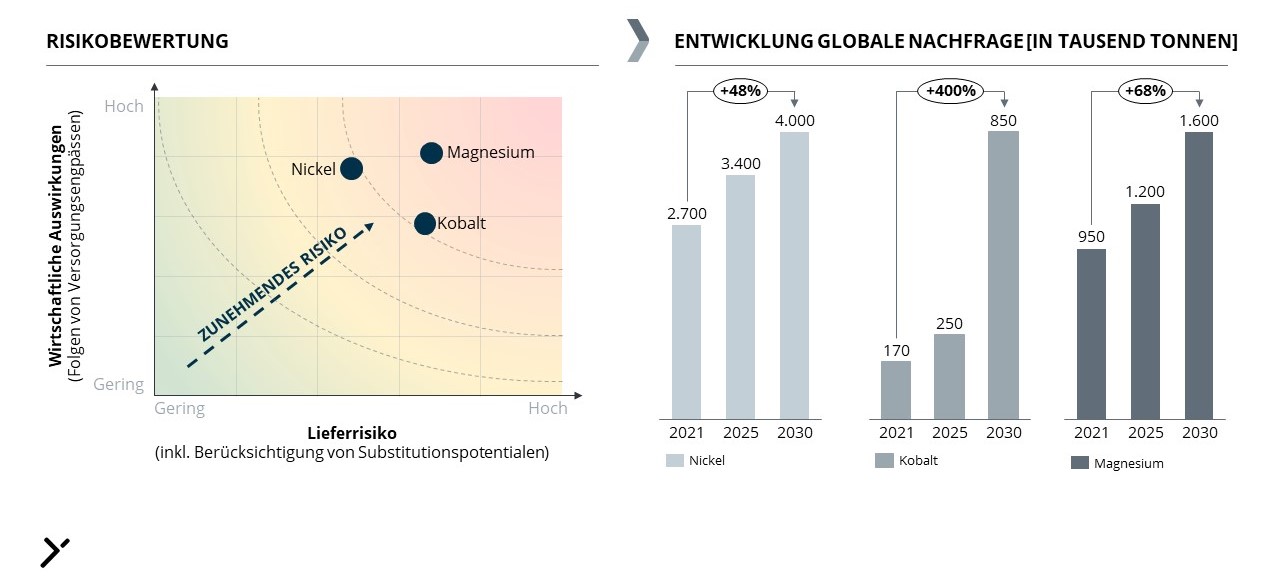
ar manufacturers have had to react to numerous external challenges in supply chains in the last few years. A shortage of key raw materials could bring about the next crisis – nickel, cobalt and magnesium are possible candidates

Over the last few years the car industry has found itself confronted with a range of major challenges in its supply chains. The Covid-19 pandemic, semiconductor shortage and now the war in Ukraine have done enormous damage. Vehicle production has fallen by 8%, from 90 million units in 2019 to 83 million in 2021.

Car manufacturers and suppliers have rapidly and repeatedly deployed their forces to solve these problems. The Volkswagen group, for example, had to organize various task forces in quick succession to support the market introduction of the electric ID.3, address the chip shortage and tackle the effects of the pandemic.

Volkswagen’s dilemma is representative of a structural problem for the whole of the global car industry: so far, companies have mostly taken only a reactive stance toward this seemingly endless series of challenges in the supply chain. The current situation in Eastern Europe is the latest example of this: some manufacturers are having to arrange second suppliers for wiring harnesses because these used to be produced in Ukraine.

With hindsight, it is obvious that a strategic analysis of new proactive approaches is necessary to reduce risks in the supply chain. So suppliers would be well advised to increase continuous transparency and early recognition of problems and configure supply chains so as to secure access to important markets and raw materials. Furthermore, it will become increasingly important to balance investment decisions between economically preferred options and minimal risk options. Suppliers and vehicle manufacturers need comprehensive knowledge of current and future challenges in the supply chain to put these approaches into practice.

The next challenge – nickel, cobalt and magnesium supplies

A shortage of important raw materials could potentially be the next major challenge for global automotive supply chains (see Figure 1). Rising energy prices increase the costs of production and transport of raw materials, while the transition to electromobility is forcing suppliers to examine the risk profile for critical raw materials. An analysis of 53 raw materials needed for electric and hybrid vehicles shows an increased procurement risk for 41 of them, in particular nickel, cobalt and magnesium.

Nickel is an important component of lithium-ion batteries, and a higher proportion of nickel increases the energy by volume and in turn the cruising range of battery electric vehicles. As the change to e-mobility accelerates, demand for nickel is forecast to rise by around 48% between 2021 and 2030. Russia is the biggest producer of nickel worldwide. In view of the uncertain duration and outcome that the invasion of Ukraine will have on future trade relations with Russia, the procurement risk rises dramatically.

Cobalt is also an important component of lithium-ion batteries. The price of cobalt has tripled since 2019, and demand is forecast to increase five-fold between 2021 and 2030. At such a rate, worldwide cobalt reserves will be exhausted by 2033. The looming procurement risk for cobalt is concentrated on two countries: the Democratic Republic of the Congo (DRC), which holds approximately 60% of global reserves, and China, which currently controls more than 50% of the DRC’s cobalt production by investing aggressively in domestic cobalt promoters. As a result around 70% of refined cobalt production takes place in China, which explains the car industry’s heavy dependence on this dominant supply chain.

China also meets around 90% of global magnesium demand and could be said to hold a monopoly. The car industry is one of the largest consumers of magnesium, where it is used mainly for lightweight construction and is essential for aluminum production. The industry’s magnesium consumption is expected to rise by an average of 7.6% per year between 2021 and 2030. The reason for this is the need to produce vehicles that are more lightweight in order to minimize emissions of fossil fuels, as well as increasing the cruising range of electric and hybrid models. A continual supply of Chinese magnesium is therefore absolutely crucial for car manufacturers, especially as the substance can only be stored for a short time. In the past year the procurement risk became clear when China reduced its production dramatically to keep within emissions regulations. Magnesium exports from China nose-dived and drove global market prices up by around 700%.

Insight download and author information

Authors

Dr. Ralf Walker

Partner

Peter Trögel

Principal

Christian Grimmelt

Principal

Eren Duygun

Consultant

Three steps needed to keep ahead of the next supply-chain crisis

These alarming procurement risks – particularly for magnesium, cobalt and nickel – underline why car suppliers need to take positive and decisive action. It is important to develop proactive and strategic answers promptly to stay on the front foot when it comes to challenges in the supply chain.

Suppliers and manufacturers should first of all increase transparency and early recognition of problems in their supply chains. Data-driven and AI-supported risk-radar systems are necessary. These not only offer transparency through the whole supply chain down to the lowest levels, but they also facilitate forecasts about possible availability shortages through the use of AI.

Suppliers should also configure their supply chains to ensure access to important markets and raw materials. This is of decisive importance for the improvement of production flexibility, as a raw material-specific or component-specific strategy is then developed that determines which components are procured locally or globally. Similarly, a decision should be made on whether to use a single- or dual-source strategy, on the basis of a risk assessment of suppliers and raw materials.

Finally, investments and risks should be balanced against each other. Suppliers need to make a judgment on whether they want to pay a premium for extra supply security, or set up a risk fund to finance “what-would-happen-if” scenarios (for example stoppages or start-up difficulties).

The worst possible option would be to continue to rely on traditional systems and risk management processes in the supply chain and procurement. Since 2020, manufacturers and suppliers have been navigating a global environment in which wars, trade disputes, Covid-19, new technologies and the transition to electric vehicles are the order of the day. Risks have appeared quickly and out of nowhere, and one shortage in the supply chain leads directly to the next. Car suppliers can successfully counter these challenges and effectively minimize the risks through proactive strategic approaches to solving the problems.

About the Authors

Dr. Ralf Walker

Dr Ralf Walker (1969) has been a partner at Berylls by AlixPartners (formerly Berylls Strategy Advisors), an international strategy consultancy specialising in the automotive industry, since September 2021. His expertise lies in the areas of operations and task forces.
He has been advising automotive manufacturers and suppliers in a global context since 2008. He also has in-depth expertise in the areas of launch & ramp-up management, turnaround management, production & supply chain optimisation, lean management and strategy development & footprint optimisation.
Before joining Berylls Strategy Advisors, he spent 18 years at PwC Strategy&, Booz & Co, Management Engineers and the Fraunhofer IPT, as well as 5 years at GKN as head of the European team and member of the global team for the introduction of lean and business excellence principles, production manager and head of industrial engineering.
He studied mechanical engineering at RWTH Aachen University and completed his doctorate at the Fraunhofer IPT in Aachen.

Peter Trögel

Peter supports companies with complex strategic and operational challenges in the automotive industry. He is an expert in operations and can look back on many years of experience in the transformation environment. His areas of expertise include development, industrialization, and production. Peter is also responsible for Berylls Digital Ventures’ digital task force solution – elyvate.

Peter also heads the Sustainability service offering at Berylls by AlixPartners (formerly Berylls Strategy Advisors). He supports clients in developing and implementing sustainable business models in the automotive industry.
Prior to joining Berylls, Peter worked for Booz & Company and PwC Strategy&, among others, as a member of the management team. He holds a diploma degree in industrial engineering from the Karlsruhe Institute of Technology (KIT) and the University of Technology Sydney (UTS).

Christian Grimmelt

Christian Grimmelt has been an integral member of the Berylls by AlixPartners (formerly Berylls Strategy Advisors) team since February 2021. Previously, he gained extensive professional experience in top management consultancies and in the automotive supplier industry.

During his time at the world’s largest automotive supplier, he drove the establishment of a central unit to optimize the company’s global logistics and production network.

Christian Grimmelt’s consulting focus is logistics and production network optimization, purchasing and (digital) operations including launch and turnaround management for OEMs and especially suppliers.

Christian Grimmelt holds a university diploma in industrial engineering from the Karlsruhe Institute of Technology.

Digitalisierung • Digitalization

Battery technology start-ups: Which direction are future business models moving in?

Munich, June 2022
A

t present we are experiencing a worldwide shift from conventional combustion engines into buzzing battery-electric vehicles.

New car registrations paint a clear picture of the trend: while worldwide the number of new registrations across all drive systems is set to increase by 5% by the year 2030, the traditional combustion engine is expected to lose significant market share and new registrations for battery-electric vehicles (BEVs) are expected to increase by a global average of more than 30%.

The fundamental building block and prerequisite for this growth will be the availability of sufficient battery cells. In 2021, the annual production capacity for lithium-ion batteries in the U.S., Europe and China was just under 700 GWh. By 2030, annual demand of up to 2,600 GWh is expected in these areas; meeting this would necessitate a 16% annual increase in production capacity. The rapid growth in battery cell demand and accompanying production capacity confronts the supplier industry with some core questions: which structures and business models will enable this growth? Will established market participants react quickly and innovatively to the trend – or will new market participants be able to capitalize on the gaps before existing suppliers are able to close them?

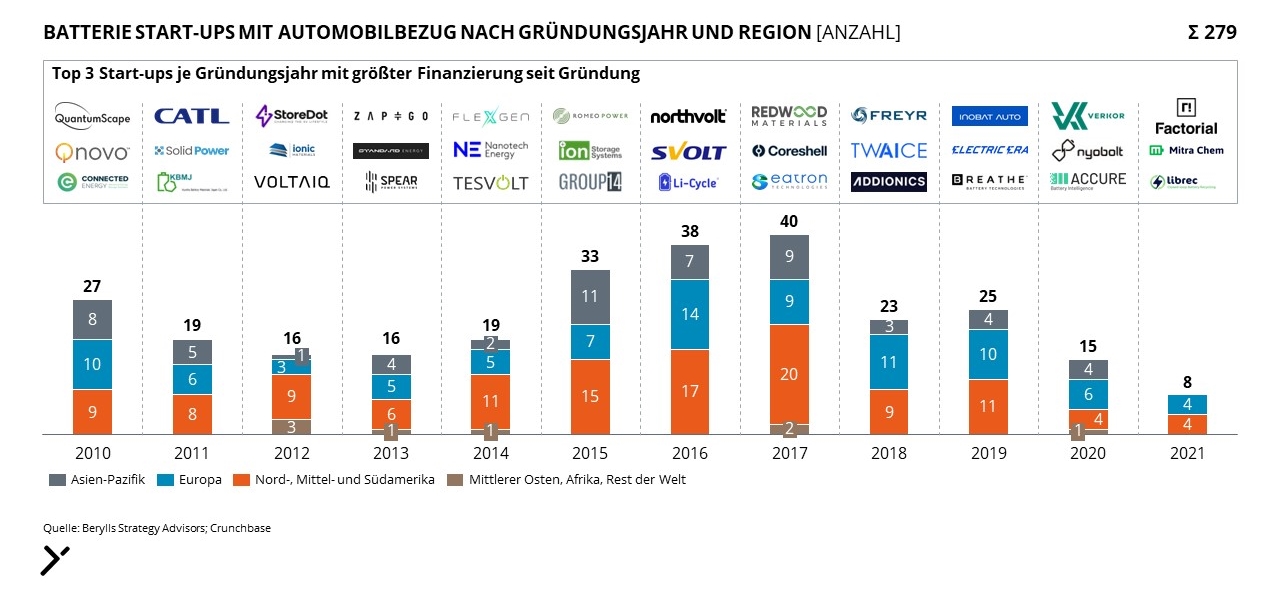
Established suppliers have taken various approaches to the shift to e-mobility, but in the last 10 years we have seen real hype around start-ups focused on battery technology and production. Out of 700 battery-related start-ups founded since 2010, 279 are connected to the car industry. Alongside great market potential and the buzz around EVs, low interest rates in the capital markets have supported this development. The number of EV battery start-ups reached a peak in 2016 and 2017, but has since slowed. As Figure 1 below shows, the majority of such start-ups come from North, Central and South America, although large companies from other regions have successfully been established, especially in the field of cell production. The Chinese supplier CATL, for example, was founded as a start-up in 2011, and by 2019 had tripled its turnover, reaching an impressive €18.1 billion in sales by 2021.

Figure 1: Battery start-ups connected to the car industry, 2010-2021

Insight download and author information

Authors

Fritz Metzger

Principal

Hendryk Pausch

Senior Associate

Sven Zellner

Consultant

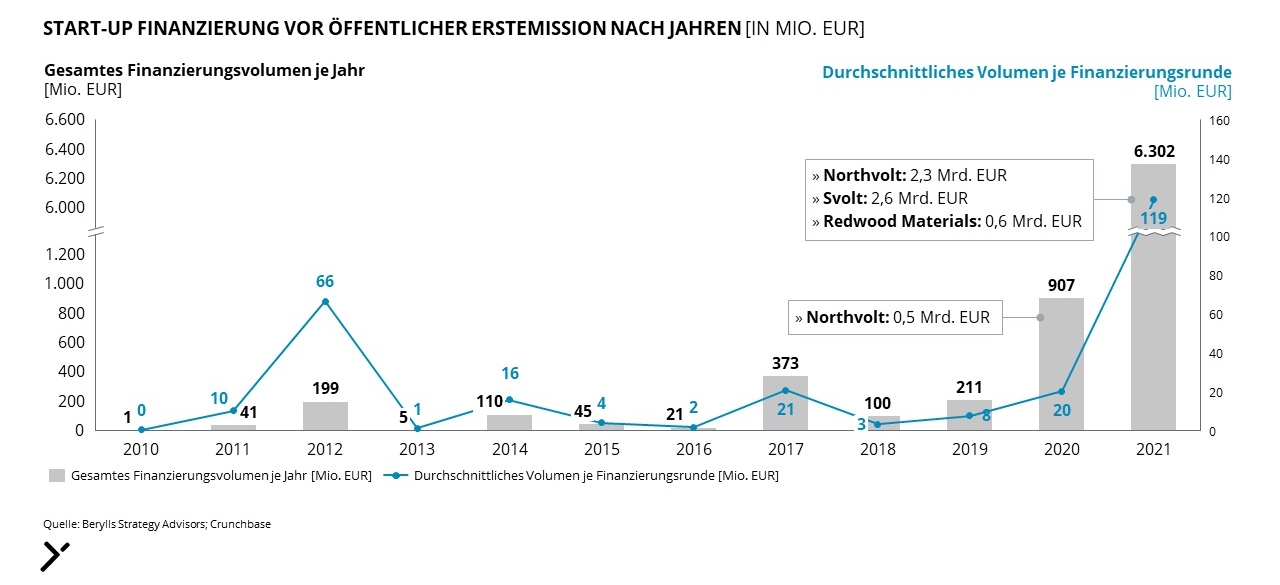
If we look at the financing of these start-ups, we see a trend toward large financing rounds, particularly in the last few years. Out of more than 200 financing rounds for the start-ups in our analysis, 53 happened in 2021 with an average volume of €119 million. The amount raised has increased seven-fold since 2020, from €900 million to more than €6 billion. Large financing volumes are to be found particularly for the investment-intensive battery producers. The capital raised is needed to expand production capacities in line with the rapidly increasing demand from car manufacturers.

Figure 2: Start-up financing before public first issue after years

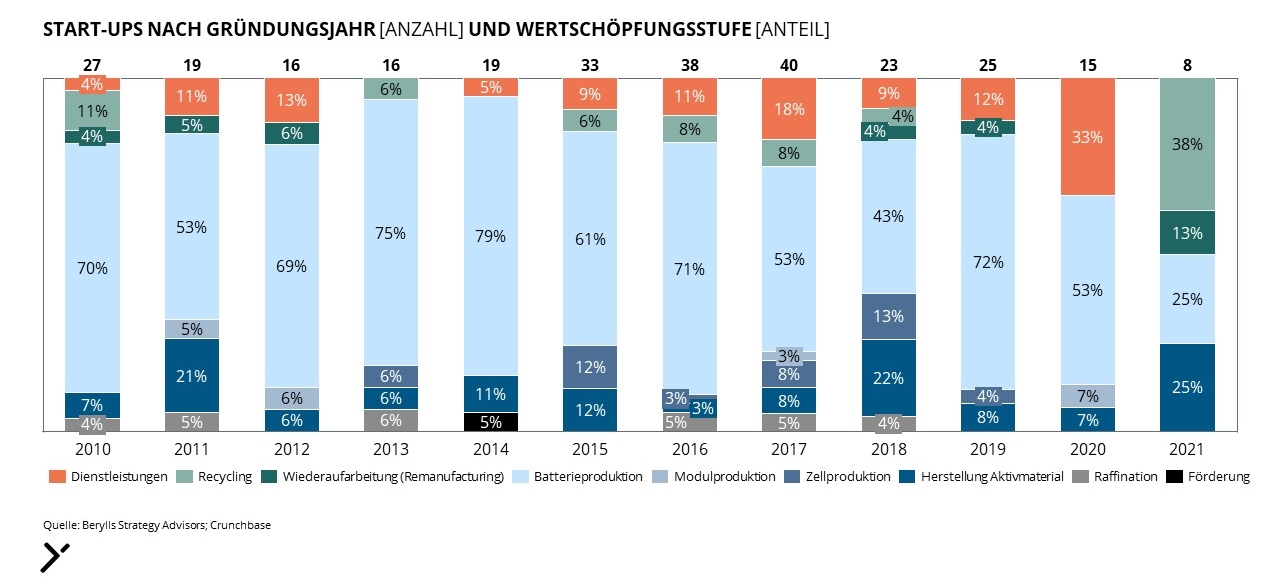
As EV battery producers increase in size, it is becoming more difficult for start-ups to break into the market. Entrepreneurs seem to be trying their luck in new and different segments of the battery value chain, and in the last few years start-ups have been founded in fields such as recycling, remanufacturing and services. Both the absolute number and the share of start-ups in the field of battery production have been declining in the last three years (Figure 3).

Figure 3: Automotive battery start-ups by year and value-chain segment

Areas which still offer potential for start-ups are field monitoring of batteries and production, and closing of material cycles. Artificial intelligence is increasingly used in these fields and contributes to quality assurance in field and production monitoring, as well as addressing unresolved sustainability challenges to create customer benefits. One example is the start-up Accure Battery Intelligence from Aachen in Germany.

The question remains: what options do established automotive suppliers have in the EV battery space? The battle for ever-larger production volume is in full cry and market share is distributed between the existing players. As a result, conventional suppliers as well as young start-ups should focus on peripheral areas and build targeted skills there, to drive forward the whole battery ecosystem and solve problems arising along the value stream. They can do this by creating their own capabilities or through acquisition from outside.

About the author

Fritz Metzger

Fritz Metzger (1986) joined Berylls by AlixPartners (formerly Berylls Strategy Advisors), an international strategy consultancy specializing in the automotive industry, in February 2021. He is an expert on automotive operations.

Since 2011, his focus has been on strategic alignment and operational efficiency improvement of automotive manufacturers and suppliers. He also advises top management in critical situations, including R&D and industrialization task forces and relocation and restructuring initiatives of plants and complete suppliers. The challenges of e-mobility are always in focus.

Before joining Berylls, he was a director at international strategy consultants PwC Strategy&, as well as a sales and project manager at a medium-sized supplier and mechanical engineering company.

Fritz Metzger is a trained industrial engineer with a degree from ESB Business School Reutlingen. He also holds an MBA from the University of Salzburg.

Market expectations and prospects for software-defined vehicles

Munich/Detroit, September 2021
T

he automotive industry is on the verge of the mostsignificant transformation in its history, as the worldshifts to electric-powered and increasingly autonomous cars.

In meeting this challenge, a key issue will
be software. Volkswagen’s chairman Herbert Diess
has described software as the biggest test of the coming change, forecasting that it will eventually account for 60-70% of vehicle product differentiation.
The reason lies in the nature of the product: the electric car of the future will always be connected, updatable and mostly self-driving, and be part of an everexpanding, integrated mobility services ecosystem.
Berylls Strategy Advisors expects that by 2030 the
proportion of vehicles worldwide that are connected,
upgradable beyond just infotainment, and may even
support autonomous driving, will sharply increase
from less than 5% to 37%. Meanwhile, connectivity
will progressively expand beyond online services for
“connected” cars to software updates for the entire
vehicle system, including critical safety functions such
as driver assistance.
Greater connectivity will enable continuous innovation, even after the vehicle has been sold, as customers purchasing decisions continue to shift away
from traditional selling points such as engine power
and torque to software functionality and over-the-air
(OTA) update capability.
Tesla is an example of how public perception of electric cars is now being significantly influenced by the
innovative potential of software. Founded in 2003,
the California-based company’s status as the leading
pioneer of software-defined vehicles has propelled
its meteoric rise to a market value of around $689bn
in August 2021. Tesla is now the most valuable car
manufacturer of all time, worth more than Toyota
and Volkswagen combined, even though the latter
companies respectively delivered 14.7 times and
12.7 times as many vehicles as Tesla in the first quarter of 2021.

Insight download and author information

Berylls Insight

Market expectations and prospects for software-defined vehicles
DOWNLOAD

Authors

Dr. Matthias Kempf

Partner

Malte Broxtermann

Principal

Sebastian Böswald

Associate Partner

Dr. Matthias Kempf

Dr. Matthias Kempf (1974) was one of the founding partners of Berylls Strategy Advisors in August 2011. He began his career with Mercer Management Consulting in Munich, Germany, in 2000. After earning his doctorate degree and further consulting work at Oliver Wyman (formerly Mercer Management Consulting), he joined the management of Hilti Germany in 2008. At Berylls, his area of expertise is new mobility services and traffic concepts. In addition, he is an expert in developing and implementing new digital business models, and in the digitalization of sales and after sales.

Industrial engineering and management studies at the University of Karlsruhe, Germany, doctorate degree at Ludwig Maximilian University, Munich, Germany.

Malte Broxtermann

Malte is an expert in the development and implementation of automotive digitization strategies.

He focuses on helping clients scale (generative) artificial intelligence to improve their bottom line across the entire automotive value chain. His primary customers are automotive manufacturers and their suppliers, especially those active in the Software-Defined-Vehicle space.

Before his time at Berylls by AlixPartners (formerly Berylls Strategy Advisors), he advised leading North American utility companies. Prior to that, he saved lives as emergency medical technician. Malte holds master’s degrees in economics from Maastricht University and Queen’s University in Canada.

Sebastian Böswald

Sebastian Böswald (1991) joined Berylls by AlixPartners (formerly Berylls Strategy Advisors) in April 2021. He is an Associate Partner and an expert in both transformation and operations. Over the last decade, he has focused his work on strategy and organizational design, as well as on two megatrends shaping the automotive industry: software-defined vehicles and CASE (connected, autonomous, shared, and electrified mobility). In these fields, he has advised our global OEM clients as well as Tier-1 suppliers and tech companies.

Prior to joining Berylls, he worked for PwC Strategy& and started his career at BMW as a project manager for product strategy and digital charging services.

He received a Bachelor of Science in Automotive Computer Science at the Technical University of Ingolstadt as well as a Master of Science in Management from the Technical University of Munich.

The future of automotive R&D: Lessons for OEMs from system engineering

Munich/Detroit, October 2021

Insights

The future of automotive R&D: Lessons for OEMs from system engineering

Munich/Detroit, October 2021
W

ith cars becoming devices-on-wheels, traditional OEM R&D organizations are reaching their limits. The component-focused organizations, that have at their core not changed since the mid-90s, are failing to tackle the complexity of modern, software-defined vehicles, as they were simply not set-up for this – but there is a tried and tested approach they can adopt.

With cars becoming devices-on-wheels, traditional OEM R&D organizations are reaching their limits. The component-focused organizations, that have at their core not changed since the mid-90s, are failing to tackle the complexity of modern, software-defined vehicles, as they were simply not set-up for this – but there is a tried and tested approach they can adopt.
By following systems engineering principles and translating them into their organization, OEMs can reduce development and management efforts and increase the quality of the product.
Find out more on which approaches we recommend the R&D organization of the future should take in our newest Berylls Insight “The future of automotive R&D: Lessons for OEMs from systems engineering”.

Berylls Insight

The future of automotive R&D: Lessons for OEMs from system engineering
DOWNLOAD

Authors

Dr. Jan Burgard

CEO

Timo Kronen

Partner

Heiko Weber

Sebastian Böswald

Associate Partner

Dr. Jan Burgard

Dr. Jan Burgard (1973) is CEO of Berylls Group, an international group of companies providing professional services to the automotive industry.

His responsibilities include accelerating the transformation of luxury and premium OEMs, with a particular focus on digitalization, big data, connectivity and artificial intelligence. Dr. Jan Burgard is also responsible for the implementation of digital products at Berylls and is a proven expert for the Chinese market.

Dr. Jan Burgard started his career at the investment bank MAN GROUP in New York. He developed a passion for the automotive industry during stopovers at an American consultancy and as manager at a German premium manufacturer. In October 2011, he became a founding partner of Berylls Strategy Advisors. The top management consultancy was the origin of today’s Group and continues to be the professional nucleus of the Group.

After studying business administration and economics, he earned his doctorate with a thesis on virtual product development in the automotive industry.

Timo Kronen

Timo Kronen (1979) is partner at Berylls by AlixPartners (formerly Berylls Strategy Advisors) with focus on operations. He brings 19 years of industry and consulting experience in the automotive industry. His focus is on production, development and purchasing as well as supplier management. Some of his recent projects include:
• Restructuring of the Procurement Function (German Sports Car OEM)
• Supplier Task Force for a HV battery cell (German Premium OEM)
• Strategy Development for the Component Production (German Premium OEM)
Before joining Berylls, Timo Kronen worked at PwC Strategy&, Porsche Consulting Group and Dr. Ing. h.c. F. Porsche AG. He holds a diploma degree in industrial engineering from the Karlsruhe Institute of Technology (KIT).

Heiko Weber

Heiko Weber (1972), Partner at Berylls by AlixPartners (formerly Berylls Strategy Advisors), is an automotive expert in operations.

He started his career at the former DaimlerChrysler AG, where he worked for seven years and was most recently responsible for quality assurance and production of an engine line. Since moving to Management Engineers in 2006, he has been contributing his experience and expertise to projects for automotive manufacturers as well as suppliers in development, purchasing, production and supply chain. Heiko Weber has extensive experience in the development of functional strategies in these areas and also possesses the operational management expertise to promptly catch critical situations in the supply chain through task force operations or to prevent them from occurring in the first place.

As a partner of Management Engineers, he accompanied the firm’s integration first into Booz & Co. and later into PwC Strategy&, where he was most recently responsible for the European automotive business until 2020.

Weber holds a degree in industrial engineering from the Technical University of Berlin and completed semesters abroad at Dublin City University in Marketing and Languages.

Sebastian Böswald

Sebastian Böswald (1991) joined Berylls by AlixPartners (formerly Berylls Strategy Advisors) in April 2021. He is an Associate Partner and an expert in both transformation and operations. Over the last decade, he has focused his work on strategy and organizational design, as well as on two megatrends shaping the automotive industry: software-defined vehicles and CASE (connected, autonomous, shared, and electrified mobility). In these fields, he has advised our global OEM clients as well as Tier-1 suppliers and tech companies.

Prior to joining Berylls, he worked for PwC Strategy& and started his career at BMW as a project manager for product strategy and digital charging services.

He received a Bachelor of Science in Automotive Computer Science at the Technical University of Ingolstadt as well as a Master of Science in Management from the Technical University of Munich.