
WANT TO DISCOVER MORE?
SEARCH
he transformation of trucking in Europe towards zero-emission vehicles is accelerating and must be accomplished within two decades.
Never since the switch from horse-drawn carriages to Diesel-powered trucks, has there been such fundamental change for the industry. Technologies are being replaced and value pools are being reallocated. But also, the daily use of trucks by their operators is changing: battery charging and range limitations heavily affect the usage and scheduling of electric vehicle fleets.
Batteries replace Diesel engines as being the most valuable single component of a truck. On a long-haul tractor with 600 kWh battery capacity, the energy storage
accounts for 60% of the total product costs. Even though this share will gradually
decrease because of improving economies of scale and evolving battery technology, batteries have a massive influence on the value of electric trucks throughout their life cycle. And here another difference to Diesel trucks comes into play: lifespans of vehicles and major components like the battery will increasingly be out of sync.
Curious? Download the full article now!
Steffen Stumpp
Steffen Stumpp (1970) joined the Berylls Group in October 2020 as Head of Business Unit Commercial Vehicles. At this point, he already looked back on extensive professional and leadership experience in the commercial vehicle industry. Stumpp started his career in an OEM and went through different roles in research, marketing, product planning and after-sales service. When he switched to the automotive supplier industry, he took over the responsibility for worldwide sales and marketing of a medium-sized tier 1 supplier. After another step as head of sales he decided to join Berylls, where he is now responsible for the commercial vehicle business.
Stumpp is a graduate engineer and has studied industrial engineering at the KIT in Karlsruhe and the Technical University of Berlin with focus on logistics.
EMs face increasing pressure to cut their environmental impact.
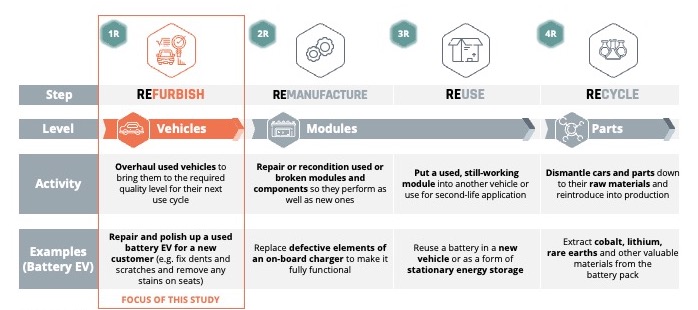
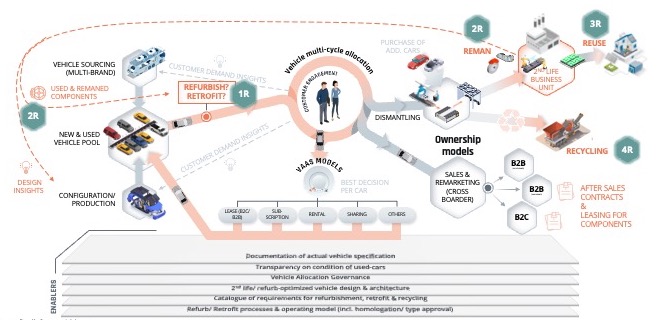
This means reducing their carbon footprint, but also their raw material and resources consumption, and making their operations and business model more sustainable (not focused solely on selling more and more cars). In response, OEMs are starting to put in place Refurbish, Remanufacture, Reuse, and Recycle (R4 or the “4Rs”) strategies to maximize their reuse of valuable materials.

Source: Berylls Strategy Advisors
However, their strategies are at the moment neither comprehensive nor consistent. On the one hand, they usually focus on end-of-life applications, such as recycling and reuse of vehicles and battery modules. Recycling and reuse are the “2Rs” that appear to be the most profitable at present (if you want to learn more, please also have a look on Berylls’ Battery Re-X study. On the other hand they tend not to consider an important prerequisite for their strategies: Being the legal owner of the vehicle throughout and particularly at the end of its lifetime (around 8-10 years).
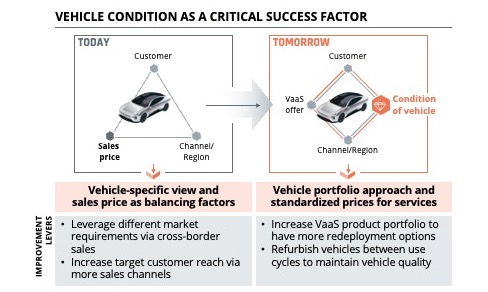
During the 8-10 year period, OEMs will need to redeploy the car to different end customers for different types of contract, as part of a multi-cycle Vehicle-as-a-Service (VaaS) sales model, rather than selling the car outright when it is new (if you want to learn more about the Berylls point-of-view on VaaS, please have a look on our dedicated website.
This multi-cycle sales model will put vehicle condition in the spotlight, as it will be essential to maintain a certain standard of quality so the car is available for as many types of business models as possible.
Source: Berylls Strategy Advisors
Efficient refurbishment operations to maintain the quality of vehicles between different use cycles will therefore become a strategic enabler for both multi-cycle sales models and for OEMs’ holistic 4R strategies.
We believe that taking a lifetime view of vehicles and components has significant strategic and commercial benefits
Source: Berylls Strategy Advisors
THE IMPORTANCE OF 4R STRATEGIES in the context of business model and sustainability transformation is increasing rapidly and only few players are starting to get prepared. Now is the time to decide whether to bea pioneer or a laggard in two of the most relevant future fields of action!
Curious? Download the full article now!
Christopher Ley
Christopher Ley joined Berylls by AlixPartners (formerly Berylls Strategy Advisors) in October 2021 as Partner. He has over 14 years of top management consulting experience with focus on new business models and market expansions within the automotive & mobility industry. He is an expert around Vehicle-as-a-Service, comprising vehicle finance & leasing, fleet management and mobility services. Christopher Ley is advising OEMs, Captives, Financial Services Companies, PE & VC Investors, Leasing & Rental Companies, Fleet Managers and Mobility Startups around the transformation from one-time sales towards use-based multi-cycle business models on a global level.
Prior to joining Berylls, Christopher Ley has been working for other international management consulting firms, amongst others Monitor Deloitte and Alvarez & Marsal. He holds a diploma degree in business administration from Johannes Gutenberg-Universität in Mainz and an MBA from Colorado State University.
Heiko Weber
Heiko Weber (1972), Partner at Berylls by AlixPartners (formerly Berylls Strategy Advisors), is an automotive expert in operations.
He started his career at the former DaimlerChrysler AG, where he worked for seven years and was most recently responsible for quality assurance and production of an engine line. Since moving to Management Engineers in 2006, he has been contributing his experience and expertise to projects for automotive manufacturers as well as suppliers in development, purchasing, production and supply chain. Heiko Weber has extensive experience in the development of functional strategies in these areas and also possesses the operational management expertise to promptly catch critical situations in the supply chain through task force operations or to prevent them from occurring in the first place.
As a partner of Management Engineers, he accompanied the firm’s integration first into Booz & Co. and later into PwC Strategy&, where he was most recently responsible for the European automotive business until 2020.
Weber holds a degree in industrial engineering from the Technical University of Berlin and completed semesters abroad at Dublin City University in Marketing and Languages.
Florian Tauschek
Florian Tauschek has 8 years of experience in strategy consulting. He focuses on business & sales model strategies for flexible Vehicle-as-a-Service (VaaS) offers.
He is an expert in topics such as customer & vehicle lifetime value optimization, the transformation of the underlying automotive sales model from one-time asset sales towards multicycle models generating recurring revenues as well as market entry strategies for various VaaS products such as operating lease or subscriptions. Furthermore he is the author of several market leading studies around VaaS.
He holds a Master of Science degree in management from HHL – Leipzig Graduate School of Management.
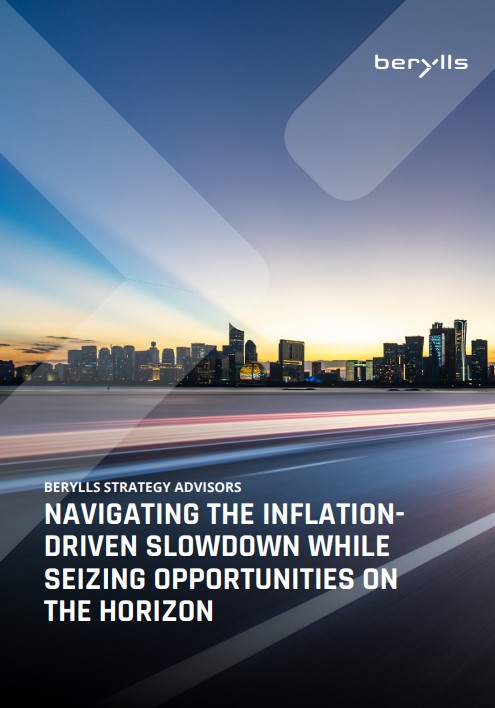
s the transition to electric mobility accelerates, Berylls’ six-point action plan will help OEMs and suppliers ride out the economic headwinds and improve digital customer engagement
This year could see the first inflation-driven global economic crisis for 40 years, as the combined impact of the COVID-19 pandemic and the war in Ukraine continues to disrupt supply chains and force up prices. The hopeful news is that most economists expect inflation rates worldwide to fall during 2023, as bottlenecks ease and energy prices come down. Nonetheless, even if a global recession is avoided, the cost of living will still be far higher for billions of consumers than before the pandemic struck.
Against this background, the automotive industry confronts a series of formidable challenges, all of which are exacerbated by inflation. Manufacturers and suppliers must cope with raw material shortages and price rises as they implement ambitious restructuring programs to keep pace with the transition to electric mobility. At the same time, the massive boost to online shopping triggered by COVID-19 lockdowns has created a new breed of digitally savvy but financially hard-pressed car buyers who are far choosier and less loyal to brands than before the pandemic.
Our report sets out how industry players can turn the current inflationary storm into an opportunity to gain a lead over competitors that cannot navigate the headwinds. The last global financial meltdown in 2008 and its aftermath offered agile, imaginative automotive companies precisely this kind of opening to seize the advantage. Consider, for instance, how Korea’s Hyundai Motor Group increased its North American market share from 5.3 percent in 2008 to 9.1 percent in 2011 by targeting customers who would not have considered buying a Hyundai or a Kia before the US subprime mortgage crisis.
The challenge today is to apply the same creative thinking in a market buffeted by inflation, where both consumer behavior and the automotive industry are evolving at unprecedented speed. After analyzing the industry’s response so far to the current inflation-driven slowdown, we make the following key recommendations for 2023 and beyond:
Curious? Download the full article now!
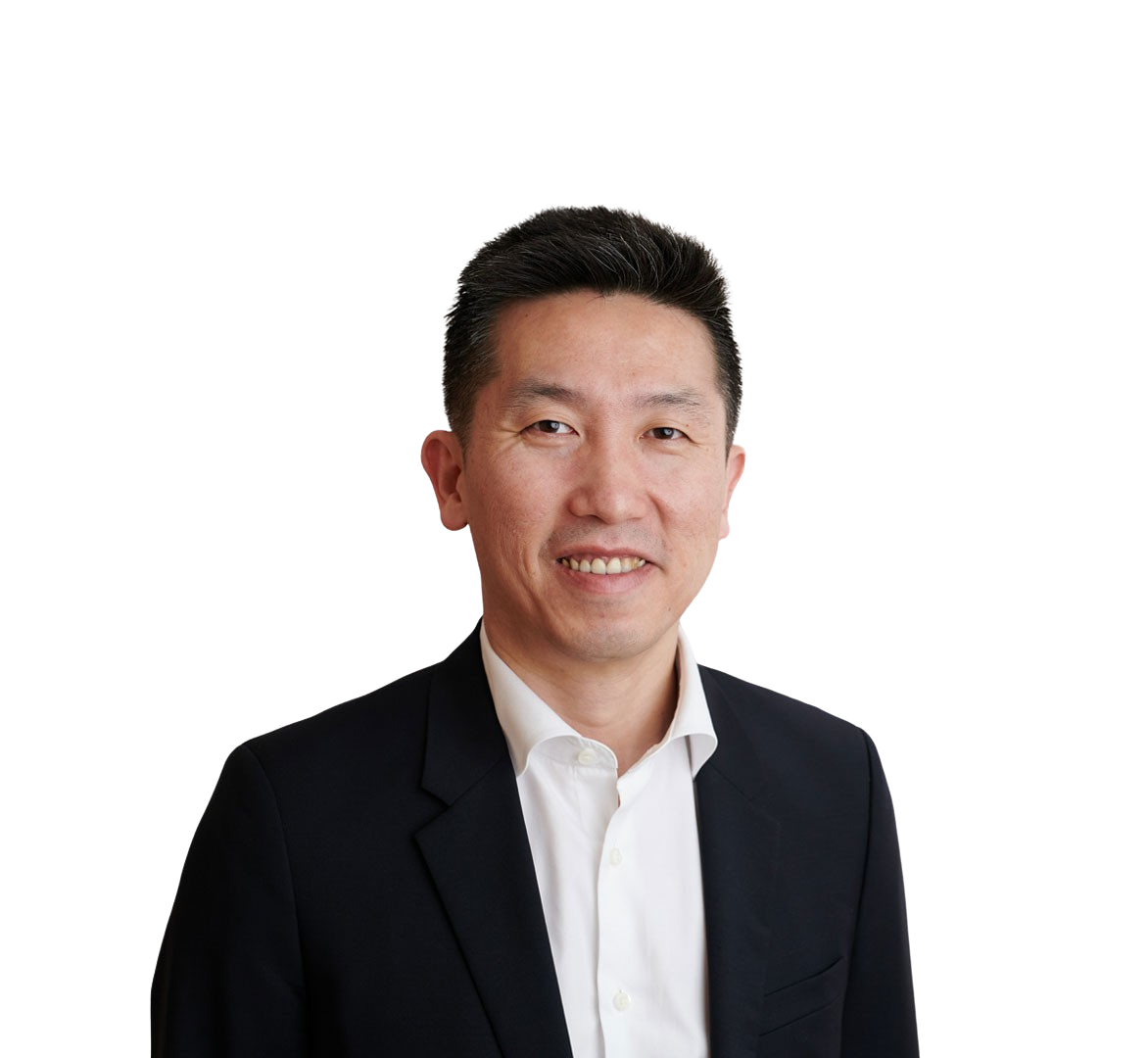
Michael Bang
Michael Bang (1971) has more than 20 years of management consulting experiences, with 15 years of which dedicated to automotive consulting. His focus is brand/marketing, EV strategies, software defined vehicle and M&As in automotive sector. He joined Berylls by AlixPartners (formerly Berylls Strategy Advisors) in January 2018 and has been leading its office in Seoul, Korea. Among 100+ projects with OEMs and suppliers, he helped a Korean automaker to successfully enter Indian market and to develop its SDV strategies, and a major Korean tier-1 to acquire the market leader in thermal management systems. Prior to business school, he was a suspension system engineer at Mando.
BS/MS in mechanical engineering from Yonsei University, Seoul/Korea, and MBA from MIT Sloan School of Management, Cambridge/USA.
s herrscht ein großer Druck für deutsche Autobauer - auf dem chinesischen Markt und auf unserem heimischen Markt in Deutschland und Europa.
Neben BYD gibt es auch neuere Marken wie NIO, MGmotor, Polestar, die unter Konstrukten wie Geely Global geführt werden. Das sind neuen Konkurrenten besonders im Premium-Segment, denn diese Hersteller haben sich ausschließlich auf den Elektromarkt konzertiert. Wenn Sie sich den europäischen Automarkt anschauen, der rückläufig ist, denn das einzige Segment, das wächst, ist das Thema Elektromobilität.
Jetzt Podcast anhören:
Quelle: Börse hören.
https://www.brn-ag.de/41624
Zum Artikel
Zum Artikel
Zum Artikel
Zum Artikel
Zum Artikel
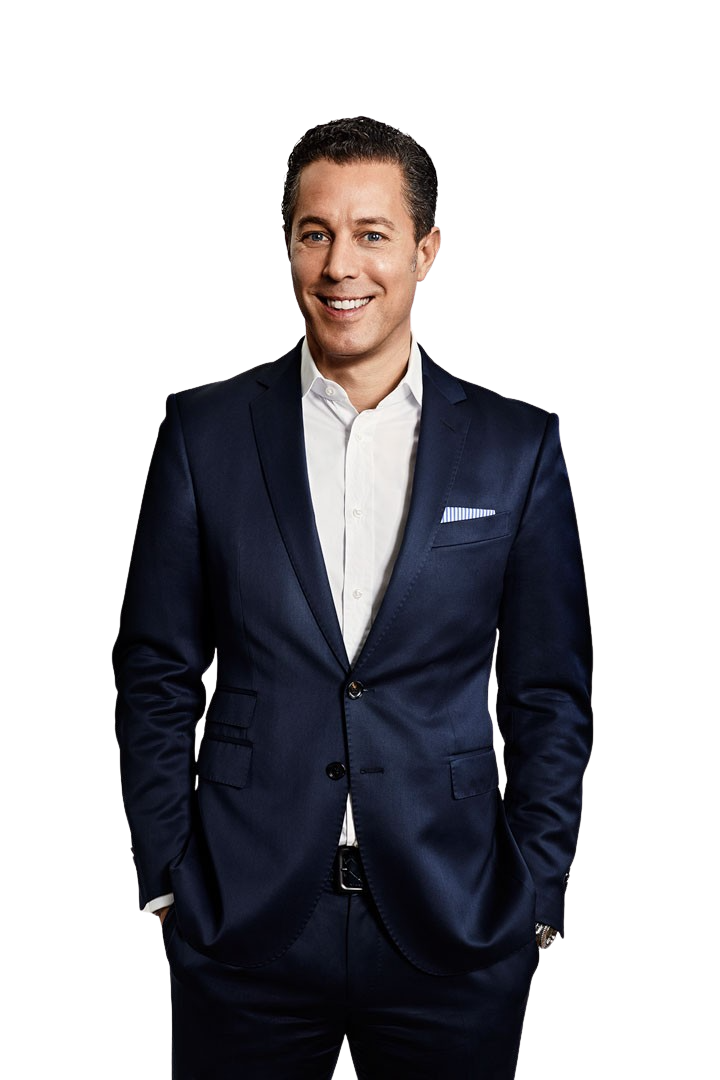
Dr. Jan Burgard
Dr. Jan Burgard (1973) ist CEO der Berylls Group, einer internationalen und auf die Automobilitätsindustrie spezialisierten Unternehmensgruppe.
Sein Aufgabengebiet umfasst die Transformation von Luxus- und Premiumherstellern, mit besonderen Schwerpunkten auf Digitalisierung, Big Data, Start-ups, Connectivity und künstliche Intelligenz. Dr. Jan Burgard verantwortet bei Berylls außerdem die Umsetzung digitaler Produkte und ist ausgewiesener Spezialist für den Markt China.
Dr. Jan Burgard begann seine Karriere bei der Investmentbank MAN GROUP in New York. Die Leidenschaft für die Automobilitätsindustrie entwickelte er während Zwischenstopps bei einer amerikanischen Beratung und als Manager eines deutschen Premiumherstellers.
Im Oktober 2011 komplettierte er die Gründungspartner von Berylls Strategy Advisors. Die Top-Management-Beratung ist die Basis der heutigen Group und weiterhin der fachliche Nukleus aller Einheiten.
An das Studium der Betriebs- und Volkswirtschaftslehre, schloss sich die Promotion über virtuelle Produktentwicklung in der Automobilindustrie an.
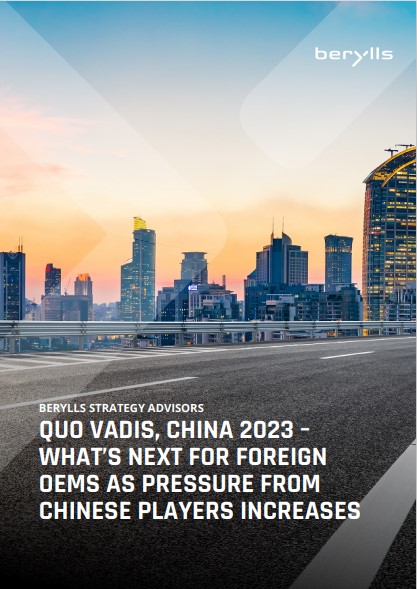
hina’s automotive market once again displayed great resilience in 2022, despite severe challenges.
In total, 23.6 million passenger cars were sold, a year-on-year increase of 9.5 percent. This included the record-breaking figure of 6.5 million new energy vehicles (NEVs), a year-on-year rise of 94.3 percent, reinforcing China’s critical role in the worldwide shift to electric mobility.
Repeating their success in 2021, Chinese players proved the big winners in the NEV market, accounting for more than 80 percent of total NEV sales. Meanwhile, established foreign OEMs lagged behind. Even premium brands which in the past could depend on success in China struggled to cope with intensifying competition from domestic manufacturers as the transition to e-mobility accelerated.
The next international phase of this battle has now begun in earnest, with Chinese automotive companies taking on major global markets, focusing especially on western Europe. In 2022, China’s total vehicle exports reached another record high of 2.5 million passenger cars, a year-on-year increase of 56.7 percent.
Looking forward, market conditions in China will remain challenging for foreign OEMs, as more new Chinese players ramp up production and sales amid rapidly changing customer tastes and shifting government priorities. Nonetheless, there are still areas such as sustainability and the metaverse where foreign players can gain a competitive advantage, as we explain in this report.
During 2022, China’s economy continued to be affected by restrictive COVID-19 suppression measures while in October, the 20th National Congress of the Chinese Communist Party (CCP) set the country’s direction for the next five years. In addition, Chinese manufacturers, like their international peers, were severely affected by the global chip shortage and rising raw material prices. Against this background, China’s automotive industry experienced a turbulent twelve months.
Curious? Download the full insight now!
Dr. Jan Burgard
Dr. Jan Burgard (1973) is CEO of Berylls Group, an international group of companies providing professional services to the automotive industry.
His responsibilities include accelerating the transformation of luxury and premium OEMs, with a particular focus on digitalization, big data, connectivity and artificial intelligence. Dr. Jan Burgard is also responsible for the implementation of digital products at Berylls and is a proven expert for the Chinese market.
Dr. Jan Burgard started his career at the investment bank MAN GROUP in New York. He developed a passion for the automotive industry during stopovers at an American consultancy and as manager at a German premium manufacturer. In October 2011, he became a founding partner of Berylls Strategy Advisors. The top management consultancy was the origin of today’s Group and continues to be the professional nucleus of the Group.
After studying business administration and economics, he earned his doctorate with a thesis on virtual product development in the automotive industry.
Willy Wang
Willy Lu Wang (1981) joined Berylls Strategy Advisors in 2017. He started his career participating in the graduate program of Audi focusing on production planning. After stations at another strategy consultancy as well as being the strategy director for a German Tier-1 supplier, he is now responsible for the China business at Berylls.
He has a broad consulting focus working for all clients in China, whether they are JVs, WOFEs or pure local players. He is also responsible for the development of AI and Big Data products dedicated towards the Chinese market further strengthening the Berylls End-to-End strategy and product development capabilities.
Wang studied Electronics & Information Technology with focus on Systems and Software Engineering and Control Theory at Karlsruhe Institute of Technology.
Hongtao Wei
Hongtao Wei (1988), Associate Partner, joined Berylls Strategy Advisors in 2015, an international strategy consultancy specializing in the automotive industry, where he focuses on all issues related to the Chinese automotive market. In addition to Western manufacturers in China, his clients also include Chinese OEMs, investors, provincial governments, and state-owned enterprises.
He has profound expert knowledge in the areas of sales and aftersales. His other areas of expertise include digitalization, connectivity, and turnaround management.
He studied Sinology, Economics and Statistics at the Ludwig-Maximilians-Universität in Munich.
Soleiman Mansouri
Soleiman joined the Berylls Group in March 2022. He has set his focus on customer-centrist solutions, gaining experience in Product- and Corporate Strategy, Consulting with the focus on the OEM business. His Automotive career started with digitalization of the Aftersales of an US OEM in Europe and took him to China to the leading German OEM group, heading the Product and Portfolio department. He gained intensive consulting experience with one of the top management consulting firms and as a freelance consultant. Before joining Berylls, he was the Director Go-to-Market of one of the top Chinese OEMs supporting their entrance into the EU market. Soleiman is a graduated M.A./MBA in International Business from the University of Hamburg and ECUST/Shanghai.
Soleiman joined the Berylls Group in March 2022 and is part of the Asia-team, responsible for supporting all players in a successful market entrance. Also, provides profound expertise of customer-centric Product Marketing and Portfolio Strategy approaches to our clients.
Soleiman is expert in customer-centric Product-/Portfolio Strategy, Go-To-Market, Corporate Strategy and Entrepreneurship.
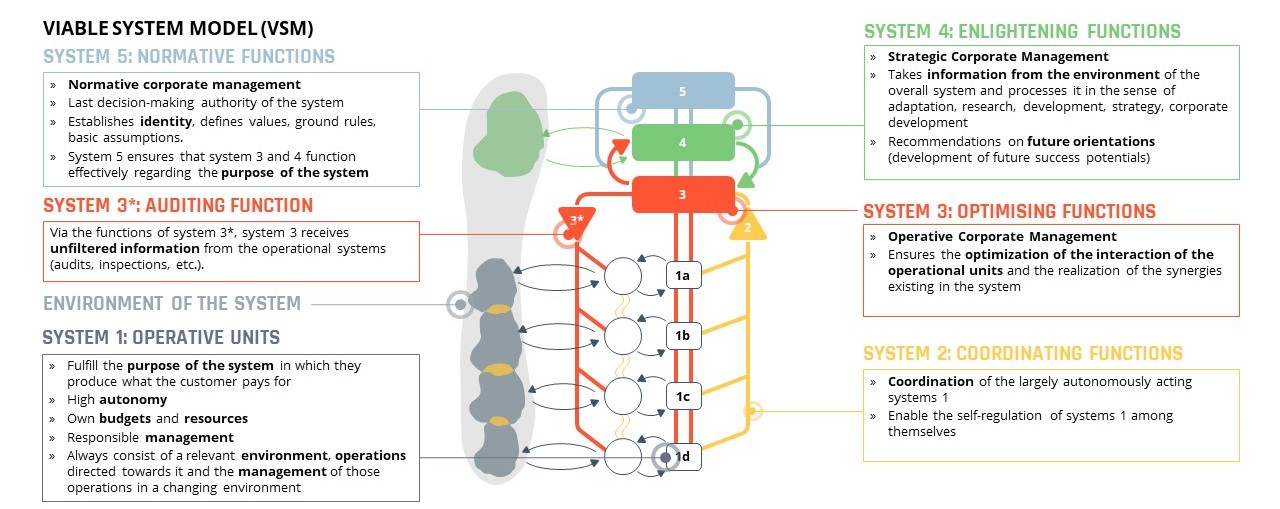
he Viable System Model (VSM) can help automotive companies steer a path to sustainable profitability while managing their increasing organizational complexity
75 percent of companies are unable to grow profitably over the long term., according to Sebastian Raisch, Gilbert Probst and Peter Gomez, authors of Wege zum Wachstum. One of the main reasons for this, is called the “growth paradox”, which describes companies chasing growth in a way that creates complexity, which actually inhibits growth.
Many executives say that it is not the complexity of external market conditions that causes them problems but the control of complexity within their own organization. Internal processes and administrative structures build up as the company grows, making it difficult for executives to maintain direct contact with their business and customers. As a result, they lose the essential focus on developing the potential for success.
This is where the Viable System Model (VSM) developed by the cybernetician Stafford Beer can help organizations make their complexity controllable and embed the important principle of self-organization.
The goal of many reorganizations is to “manage” corporate complexity. However, Berylls’ research and feedback from our clients suggests that most such exercises in the automotive industry only achieve limited success. Martin Pfiffner, author of The Neurology of Business: Implementing the Viable System Model, has identified the following cardinal errors that mean reorganizations often fail to have the desired impact:
The VSM offers executives a framework for avoiding these errors and shows how they can solve the problems created by complexity. Its primary focus is not to define structures such as divisions and departments within a successful organization, but to define the relationships between them.
A fundamental principle of the VSM is that the operational units of a company must be organized as viable systems according to the same model. This principle, called “recursivity”, enables problem-solving strategies for dealing with complexity and creating order out of chaos across the organization.
Box: How the Viable System Model was created
Why VSM is especially relevant to automotive companies
Many major OEMs and suppliers are undertaking or considering hugely ambitious reorganization programs to keep pace with the industry’s accelerating transformation. The VSM, correctly applied, is a critical approach for managing these organizations’ increasing complexity while maintaining growth and staying ahead of competitors.
To manage the increasing complexity within automotive organizations, the VSM provides five key control functions:
Figure 1: Viable System Model in an automotive company
Source: Berylls Strategy Advisors, following Pfiffner (2020) - Die dritte Dimension der Organisierens
Berylls’ research and our work with clients globally confirm that the VSM has repeatedly delivered rapid, effective solutions. Here are our key insights about how the VSM can be applied to achieve the only success that counts – satisfying customers to generate sustainable, long-term profitability:
Putting the customer first
It is crucial to design the organization’s dominant control dimension correctly to ensure that the business is structured in such a way that it focuses on the customer’s purchasing criteria and can implement the defined strategy effectively. Potential control dimensions include products, technologies, customer groups, applications, or regions.
Examples:
Premium OEMs: Cars, Vans, Service & Parts, Digital Services, Financial Services
Automotive Software Suppliers: Car Operating System, Omni Channel Commerce, After Sales, Production Automation, Enabler Technologies
Determining how far to decentralize:
Within operating business units, it is important to ensure that managers are responsible for the competencies and resources that determine success (System 1, see Figure 1). This autonomy should cover all functions that have a direct influence on the criteria that determine purchasing, such as product development.
At the same time, responsibility for organization-wide functions such as IT cannot be delegated, while central management may need to maintain control of plants or production capacities shared by operating units to achieve synergies between them (System 2).
The right degree of centralization can be calculated by asking the following questions:
Firstly, can we afford decentralization?
If the answer is yes, will decentralizing a task influence one or more key customer purchasing criteria?
If the answer is no, can a synergy be achieved by continuing to centralize the task?
If the answer is again no, the task should be assigned to the relevant unit because of the principle of subsidiarity.
Flattening further than conventional wisdom suggests
“How many direct reports can be managed?” is the wrong question. In our experience the traditional rule that there should be a maximum of seven “direct reports” fails in most cases. The correct approach is to look at horizontal and vertical complexity and consider how much autonomy operational units need to perform at their best and whether they need more or less support from senior management (horizontal complexity). In addition, reorganization programs should address whether senior management has sufficient scope for intervention to limit the autonomy of operating units in the interests of the whole company (vertical complexity).
At one automotive supplier, a VSM diagnosis showed that the organization could be flattened from five to four management levels by dissolving three business units and converting ten new product units into fully-fledged operational units. This flattening was possible because the product divisions were different and to a large extent able to manage their complexity independently. Furthermore, senior management had significant vertical complexity control to ensure overall optimization of the product areas (System 3).
Navigating into the unknown
In the automotive industry, navigating a rapidly changing environment must also be organized, with senior management taking the lead (System 4). Senior executives and senior operation leader (System 4 and 3) must balance what is right for today’s business with what is important for the future, while identifying external opportunities and threats. The last function to be designed is normative management (System 5) which defines the business mission and formulates governance policies which establish the guard rails within which strategic and operational management can function. This interplay of operational, strategic and normative management is of utmost importance to a successful transformation.
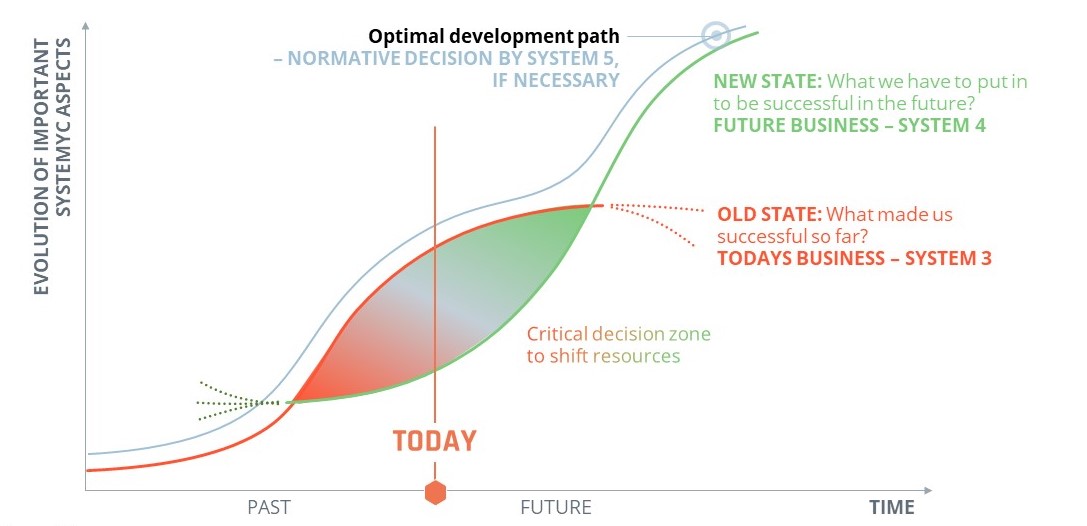
The timely redirection of human and financial capital from the old to the new business is both the most difficult and important task currently confronting the automotive industry. Figure 2 shows this interplay and the shift from the lower S-curve to the upper S-curve. However, too many senior automotive managers lack sufficient time to devote to strategic questions such as how much to invest in electromobility, connectivity or ADAS development because they are mired in operational issues which absorb most of their attention.
Figure 2: Adaptability – When do we change course?
Source: Malik, Berylls Strategy Advisors
By applying the VSM, an increasing number of OEMs and suppliers have executed successful organizational transformations that free up management time while delivering the critical interplay of operational, strategic and normative management. In plain terms, they are at least one step ahead of their competitors in seizing the opportunities created by this period of industry transition and transformation.
Dr. Christopher Brüggemann
Dr. Christopher Brüggemann (1983) is a Project Manager with focus on transforming organizations to improve performance, speed and agility. He is also an expert in strategy deployment, organizational design, and transformational change. Christopher has advised numerous companies through multiyear organizational transformations, often focused on operating model development and putting new ways of working, structures, processes, decision making mechanism in place.
Before joining Berylls, Christopher worked at Sixt SE, several other consultancies, and served as a research associate in cooperation with Deutsche Telekom. He has a PhD in economics and a diploma degree in business administration of Bayreuth University.
Peter Eltze
Peter Eltze (1964) joined Berylls by AlixPartners (formerly Berylls Strategy Advisors) as a Partner in November 2015. He began his career in the medical technology division of an integrated technology corporation, and became a project manager at Malik Management Zentrum St. Gallen in 1996 before being appointed Partner in 2001. From 2003, in his role as member of the executive board, he was in charge of Management Education & Development. Since the end of the 1990s, Peter Eltze has advised companies in the automotive and mechanical engineering industries. At Berylls, his consulting activities focus on integrated organizational development (strategy, structure, culture), transformation management, and executive development.
Education in wholesale and international trade; administrative sciences at the University of Constance, Germany.
Laura Kronen
Laura Kronen (1980) is a partner at Berylls by AlixPartners (formerly Berylls Strategy Advisors) with a focus on transformation. She is passionate about moving people and organizations forward. With over 18 years of industry and consulting experience, her focus is on transformative challenges in the operations context – from executives to individual employees, at manufacturers and suppliers. She helps her clients align strategy, structure, and culture in their respective market environments to build resilience.
Prior to joining Berylls, Laura Kronen worked at PwC Strategy&, Volkswagen AG and Audi. She holds a diploma degree in industrial engineering from the Karlsruhe Institute of Technology (KIT).
Dr. Martin Pfiffner
Dr. Martin Pfiffner (1965) works at Oroborus Fondation. Martin is one of the world’s leading experts on the practical implementation of the Viable System Model and Syntegration. Over the last thirty years, he has advised numerous economic, public, and private entities across the world, helping them get back on track and achieve success. His work centers on “The third dimension of organization,” which he defines as the neurology of an organization. His most recent book is The Neurology of Business: Implementing the Viable System Model (2022)
Martin studied economics at the University of St. Gallen (HSG) and earned his doctorate. At the time, he served as an assistant to professors Peter Gross (sociology, multi-option society) and Fredmund Malik (systems-oriented management theory). Later he studied in Canada and in Wales with Professor Stafford Beer, the pioneer of management-cybernetics.
ine erfolgreiche Transformation ist nur möglich, wenn die Führungskräfte die entsprechenden Qualitäten mitbringen.
Der Begriff der Transformation ist allgegenwärtig und auch in der Automobilindustrie nicht mehr wegzudenken. Es geht darum, dass das Unternehmen sich umorientiert. Dass das Unternehmen Dinge neu erlernen -sowie eingeschlagene Pfade verlassen muss.
Wenn wir von der Transformation sprechen, müssen wir auch über die Transformation der Führungskräfte sprechen.
Jetzt Podcast anhören:
Quelle: Börse hören.
https://www.brn-ag.de/41564
Laura Kronen
Laura Kronen (1980) ist Partner bei Berylls by AlixPartners (ehemals Berylls Strategy Advisors) mit Schwerpunkt Transformation. Menschen zu bewegen und Organisationen voranzubringen begeistert sie. Mit über 18 Jahren Industrie- und Beratungserfahrung liegt ihr Fokus auf transformativen Fragestellungen im Operations Umfeld – vom Executive bis zum einzelnen Mitarbeiter, bei Herstellern und Zulieferern. Sie unterstützt ihre Kunden dabei, Strategie, Struktur und Kultur in ihrem jeweiligen Marktumfeld in Einklang zu bringen und somit ihre Resilienz zu stärken.
Bevor Laura Kronen zu Berylls kam, arbeitete sie bei PwC Strategy&, Volkswagen AG und Audi. Sie hat einen Diplomabschluss in Wirtschaftsingenieurwesen vom Karlsruher Institut für Technologie (KIT).
Peter Eltze
Peter Eltze (1964) ist seit November 2015 als Partner bei Berylls by AlixPartners (ehemals Berylls Strategy Advisors) tätig, einer internationalen und auf die Automobilitätsindustrie spezialisierten Strategieberatung. Er ist Experte für ganzheitliche Transformationsprozesse und kann auf eine langjährige Erfahrung im Vertriebs- / Marketing- und Operations-Umfeld zurückschauen.
Peter Eltze berät seit 1994 Automobilhersteller und -zulieferer im globalen Kontext. Er verfügt über ein fundiertes Expertenwissen in den Bereichen Strategie- und Organisationsentwicklung. Zu seinen weiteren fachlichen Schwerpunkten zählen unter anderem Top Executive Coaching und der Themenkomplex rund um die Gestaltung von Führungsstrukturen und -konzepten.
Vor seinem Einstieg bei Berylls Strategy Advisors war er für MP und Malik als Mitglied der Geschäftsführung.
Im Anschluss an seine kaufmännische Ausbildung bei Siemens studierte er Verwaltungswissenschaften mit dem Schwerpunkt Managementlehre an der Uni Konstanz.
o you want to know what excites us most about transformation? Get to know the members of our team to find out!
Associate Partner
After graduation, I started as an executive assistant and was immediately appointed to the core team of a company-wide business reengineering program. From then on, the topic of transformation has been at the center of my work. Both in my next job as a member of the management team in a medium-sized company and then later as a consultant, the support of strategically-induced major change processes was always the focus.
In St. Gallen, I learned the systemic approach and the foundational interplay of strategy, structure, culture, and leadership, which is still part of my methodology for transformation projects at Berylls.
It always excites me to realign or revitalize organizations and help them elevate to a higher level of performance. The greatest thing for me is when we succeed in inspiring executives and employees along this journey, so that they can support the transformation and further develop themselves throughout the process. Only then will the changes we have initiated be put into practice and bear fruit. It is also a pleasure to support companies in this transformational process over a longer period while building lasting relationships.
Ultimately, a transformation is like an open-heart surgery, often exhausting because of its dynamic and complex nature, but at the same time it is very fulfilling when success becomes visible and sustainable.
I regularly work for automotive OEMs and suppliers. For larger transformation projects, my clients are typically from the C-suite level or are their direct reports. For management system topics, I usually work closely with subject matter experts and change agents.
Project Manager
Originally via strategy work. We always discuss a holistic approach with our clients, and the best strategy only helps if it can also be implemented. My first transformation client had expressed their wish for our implementation support to bring our strategy to life. From then on, I didn’t want to just drop the pen after strategy development.
It’s also very nice to actually be able to see the results of one’s work!
I’m excited about linking strategy and implementation. The best strategy can only be implemented if it is supported by the employees and if the organization is adapted in such a way that enables employees to impact change. At the end of the day, it’s always the people that matter.
So far, I’ve worked with premium OEMs where I have focused on sales, marketing, and HR. I work with both middle and senior management levels.
Associate Partner
I was first thrown into the deep end during my second consulting project, but then quickly discovered my passion. In terms of methodology, it fits perfectly with my focus on software-defined vehicles, where there is a huge need for transformation. This allows me to advise my customers not only on content, but also directly on the transformation process.
I see two factors there: firstly, I enjoy working with people to help them grow and succeed – this makes our work more tangible than pure strategy concepts.
Secondly, the measurable impact that the transformation work has enables me and my clients to assess how things have improved after only a few months! Our concepts go directly into implementation and don’t disappear into a drawer.
My focus is on OEMs, mostly within central organizational development. My contacts range from mid-level-management to C-suite level. My smallest transformation project involved 100 FTEs while my largest involved 20,000 FTEs.
Senior Consultant
As a psychologist, I have a natural interest in change and transformation. But I quickly realized that pure methodological knowledge alone is not enough. Strong content know-how is also required to have a real impact. That’s why I combine strategy and transformation consulting.
That it goes beyond pure strategy work. Good strategy work is still essential, but transformation also gives me the opportunity to implement these strategies and achieve tangible results.
Another relevant aspect for me is the fact that there is organizational development in every transformation. Ultimately, we are changing the environment in which thousands of people work every day – it is impressive to see how transformations can change this for the better.
My projects are close to top management, as they are usually game-changer projects for my clients. The size of the transformation project team varies. The largest one was staffed with almost 1000 employees from our client and other consulting companies.
Theresa Stütz
Theresa Stütz (1991) joined Berylls Strategy Advisors in December 2017. Meanwhile she is associate partner and automotive downstream expert.
She has been advising automotive manufacturers in a global context both in the luxury and premium segment. She has in-depth expert knowledge in the areas of sales and marketing, particularly in the context of customer experience strategies. Other areas of expertise include strategy development processes, Go-to-market strategies and transformation management.
Theresa received both Bachelor and Master of Science in Management and Technology (Mechanical Engineering) at Technical University of Munich.
Dr. Frank Heines
Sebastian Böswald
Sebastian Böswald (1991) joined Berylls by AlixPartners (formerly Berylls Strategy Advisors) in April 2021. He is an Associate Partner and an expert in both transformation and operations. Over the last decade, he has focused his work on strategy and organizational design, as well as on two megatrends shaping the automotive industry: software-defined vehicles and CASE (connected, autonomous, shared, and electrified mobility). In these fields, he has advised our global OEM clients as well as Tier-1 suppliers and tech companies.
Prior to joining Berylls, he worked for PwC Strategy& and started his career at BMW as a project manager for product strategy and digital charging services.
He received a Bachelor of Science in Automotive Computer Science at the Technical University of Ingolstadt as well as a Master of Science in Management from the Technical University of Munich.
n der Automobilzuliefer-Branche häufen sich bereits seit einiger Zeit die Krisenfälle.
Aber mit dem richtigen Konzept für die Zukunft kann es wieder nach oben gehen. Die Berylls Group GmbH mit Hauptsitz in München hat über ihren Beteiligungsarm Berylls Equity Partners den insolventen Automobilzulieferer Huhn übernommen – unterstützt durch eine Fremdkapitallösung von Creditshelf.
Von Alexander Görbing
Vor zwei Jahren kam die schlechte Nachricht, die Heinrich Huhn-Gruppe musste Insolvenz anmelden. Im Verlauf des Insolvenzverfahrens konnte mit der Berylls Group GmbH ein strategischer Investor gefunden werden, der über eine umfangreiche Erfahrung in der Mobilitäts- und Zuliefererbranche verfügt. Im Rahmen eines Insolvenzverfahrens müssen alle Beteiligten eng zusammenarbeiten – und das unter hohem Zeitdruck. Wenn hier die Zahnräder nicht reibungslos ineinandergreifen, dann kann die geplante Unternehmensrettung auch noch an Kleinigkeiten scheitern. Wie das Zusammenspiel der einzelnen Parteien idealerweise, funktioniert, zeigte sich dagegen beim Automobilzulieferer Huhn aus Drolshagen in der Nähe von Siegen in Nordrhein-Westfalen.
„Es ist immer sehr wichtig, dass alle Player im Prozess sehr gut informiert sind, dass es einen Zeitplan gibt und dass dieser dann auch eingehalten wird. In einem Insolvenzverfahren bauen viele Entscheidungen aufeinander auf und es gilt Fristen einzuhalten, um zu vermeiden, dass zeitkritische Folgeprobleme entstehen können“, erklärt Stefan Hnida, Leiter Partnermanagement bei der Creditshelf AG. Seit mehr als zwei Jahren setzen sich Teams bei Creditshelf auch mit Finanzierungen im Bereich von Distressed M&A auseinander. Bislang gab es schon ein gutes Dutzend Fälle, die mit Fremdkapitallösungen ermöglicht wurden. „Ermöglichen ist genau das richtige Stichwort, denn wir verstehen uns bei diesen Transaktionen als eine Art ´Deal-Enabler´ für einen strukturierten Verkauf“, fährt Hnida fort. Angesichts der Vielzahl an Herausforderungen weltweit, rechnet er für die kommenden Monate mit mehr Geschäft in diesem Bereich. Das liege nicht nur an den Nachwirkungen der Corona-Pandemie und der aktuellen Kosten- und Lieferkettenkrise, sondern auch an der zunehmenden Zurückhaltung von klassischen Banken. „Wir agieren sicher etwas risikofreudiger als traditionelle Geldgeber – aber wir lassen uns das auch entsprechend bezahlen“, so Hnida weiter.
Im Fall der Heinrich Huhn-Gruppe ging das Team von Creditshelf ähnlich vor wie bei vergleichbaren Finanzierungsentscheidungen im Bereich Automotive. Ein Kriterium bei der Entscheidung ist unter anderem der Umfang der Wertschöpfungskette. Weiterhin werden auch die Marktchancen im Bereich der Elektromobilität überprüft, während die Lieferung von Komponenten für den konventionellen Antriebsstrang eher negativ bewertet wird. „Die Unternehmen, die wir uns ansehen, sind oftmals im Kern grundsolide und haben ein tragfähiges Geschäftsmodell. Trotzdem können sie durch unerwartete Entwicklungen in eine Liquiditätskrise geraten“, so Hnida. Insgesamt sei die gesamte Branche sehr finanzierungsintensiv, durch hohe Aufwendungen im Bereich Investitionen, Lagerhaltung sowie Forschung und Entwicklung. Bei der Frage einer Finanzierungsbeteiligung sei es aber ebenso wichtig zu erfahren, welche Pläne der neue Investor mit dem Unternehmen hat und welche Wachstumsstory es geben soll.
Die Heinrich Huhn-Gruppe beschäftigt rund 500 Mitarbeiter an ihren Standorten in Drolshagen sowie bei der Tochtergesellschaft in Vráble (Slowakei). Das Unternehmen, das auf eine über 100jährige Geschichte zurückblicke kann, beliefert weltweit Abnehmer aus der Automobilbranche mit Metallumformteilen für Bremskraftverstärker, Lenksäulen, Getriebe, Lager sowie mit weiteren Baugruppen im Automobilbereich. 1912 gegründet, war die Heinrich Huhn Deutschland GmbH ein Familienunternehmen, das bis in die vierte Generation in der Hand der Gründerfamilie blieb. Die Herausforderungen für den Automobilzulieferer, wie die die Dieselkrise und die weltweite Corona-Pandemie, waren dann die Auslöser für eine existenzbedrohende finanzielle Schieflage. „Als wir auf die Huhn-Gruppe aufmerksam wurden, waren wir schnell der Ansicht, dass wir für die herausfordernde Situation des Unternehmens eine schnelle und effektive Lösung finden können. Das war für uns dann der Auslöser, um uns intensiver mit einer möglichen Übernahme zu beschäftigen“, erklärt Andreas Rauh, Geschäftsführer bei Berylls Equity Partners GmbH. Der sofort eingeleitete Transformationsprozess wurde dann allerdings im vergangenen Jahr durch die Halbleiterkrise empfindlich gestört. „Es hat sich im Nachhinein als sehr gut erwiesen, dass wir bei unserem Übernahmekonzept ein paar Sicherheitspolster vorgesehen haben“, fährt Rauh fort. Trotz aller Widrigkeiten befinde man sich auf einem guten Weg, denn – so fügt er an: „sicherheitsrelevante Teile in den Bereichen Lenkung und Fahrwerk im Auto werden immer gebraucht, selbstverständlich auch beim E-Auto“.
Die Berylls Group GmbH hat neben dem Hauptgeschäft der Top-Level-Management-Beratung in 2020 ihren Beteiligungsarm Berylls Equity Partners gegründet, um mit eigenem Kapital in kriselnde Unternehmen der Mobilitätsindustrie zu investieren. „Wir haben auf der Beraterseite so viele erfolgreiche Unternehmenstransaktionen begleitet, dass wir uns das auch selbst zugetraut haben“, sagt Rauh. Inzwischen gab es in jedem Jahr eine Übernahme und das Berylls-Team hält weiter die Augen offen. Durch die gute Vernetzung in der Automotive-Branche bekomme man frühzeitig Hinweise so wie schnelle Einschätzungen über die Krisenursachen und Marktchancen möglicher Übernahmekandidaten. „Wir wissen relativ schnell, ob es sich bei einem Unternehmen lohnt, tiefer in die Zahlen einzusteigen. Entscheidend ist für uns an erster Stelle immer unsere Einschätzung der Nachhaltigkeit des Geschäftsmodells. Nur wenn wir bei Berylls Equity Partners von ihr überzeugt sind, prüfen wir detaillierter, ob sich ein Investment lohnen kann“, erklärt Rauh weiter. Im Mittelpunkt steht immer, die Firmen im Berylls Portfolio langfristig erfolgreich zu entwickeln.
Bei der Heinrich Huhn-Gruppe läuft derzeit die Aufbau-Arbeit nach der überstandenen Insolvenz weiter. „Aktuell haben wir mit den Unsicherheiten durch die Entwicklung bei den Energiekosten zu kämpfen“, erklärt Jens Lange, seit 01. Juli 2022 Geschäftsführer der Heinrich Huhn Gruppe. Die hohen Tarifabschlüsse in der Metallbranche seien auch nicht hilfreich. Beide Faktoren – zusammen mit einem unverändert unsicheren Abrufverhalten der Hersteller – könnten nach seiner Ansicht besonders im Jahr 2023 zu weiteren Krisen in der Automotive-Branche führen. Bei der Heinrich-Huhn-Gruppe setzt man langfristig darauf, neue Geschäftsfelder zu erschließen. „Wir sehen Energiespeichersysteme, die in Zukunft verstärkt im Stromnetz eingesetzt werden, als eine Technologie mit viel Potenzial für die Zukunft. Da wollen wir ganz vorne mit dabei sein“, so Lange. Aktuell sei das Unternehmen noch „100 Prozent Automotive“ – aber man wolle sich beim Know-how breiter aufstellen. Geplant ist außerdem die Erschließung neuer Kundengruppen. Parallel sollen die Aktivitäten am zweiten Standort des Unternehmens in der Slowakei als auch außerhalb Europas auf- bzw. ausgebaut werden. Denn auch bei der Huhn Gruppe kann man sich einem generellen Trend in der Industrie nicht verschließen. Die aktuellen Bedingungen insbesondere bei den Energiekosten führen branchenweit zu einem Verlagerungsdruck.
Firmeninfo: Heinrich Huhn Gruppe
Branche: Automobilzulieferer
Gründung: 1912
Mitarbeitende: 500
Umsatz: ca. 100 Mio. EUR
Andreas Rauh
Andreas ist seit Januar 2020 als Mitgründer und Geschäftsführer bei Berylls Equity Partners tätig. Berylls Equity Partners investiert, als Beteiligungsgesellschaft der Berylls Gruppe, in Unternehmen der Mobilitätsindustrie, die sich in Sondersituationen befinden.
Andreas ist Experte in den Bereichen Private Equity, Mergers & Acquisitions und Unternehmensführung.
Nach zehn Jahren im Bereich Transaktionsberatung mit Schwerpunkt im Mittelstand wechselte Andreas im Jahr 2014 in den Beteiligungsbereich. Dort hat er seitdem in leitender Funktion eine zweistellige Anzahl an Firmenübernahmen und -verkäufen begleitet.
Andreas ist ausgebildeter Diplomkaufmann mit einem Abschluss von der Universität Trier und hält einen Master of Science in Business Abschluss der Handelshøyskolen BI.
NO TIME TO READ THIS WEBSITE?